
What's Happening?
U.S. consumers are adjusting their spending habits in response to rising gas prices, a trend exacerbated by the ongoing conflict with Iran. Retailers like Walmart and McDonald's have noted a shift in consumer behavior,
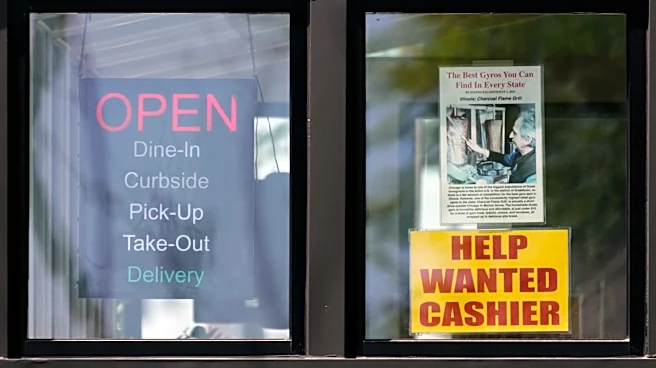
with lower-income households cutting back on discretionary spending, particularly in fast-food purchases. The National Restaurant Association reported that while restaurant traffic remained stable in April, spending increases were primarily due to higher menu prices. Retail analysts suggest that the cumulative impact of higher gas prices and inflation is leading to a more cautious approach to spending, with consumers prioritizing essential purchases over non-essential items.
Why It's Important?
The shift in consumer spending patterns has significant implications for the U.S. economy, particularly for sectors reliant on discretionary spending. Retailers and restaurants may face challenges as consumers become more budget-conscious, potentially impacting sales and profitability. The trend also highlights the broader economic pressures faced by households, as rising costs in essential areas like fuel and food strain budgets. This could lead to a slowdown in economic growth if consumer spending, a key driver of the U.S. economy, continues to weaken.
What's Next?
Retailers and analysts will be closely monitoring consumer behavior as the situation evolves. If gas prices remain high, further adjustments in spending patterns are likely, potentially affecting sales in various retail sectors. Businesses may need to adapt by offering more value-oriented products or promotions to attract budget-conscious consumers. Additionally, policymakers may face pressure to address the underlying economic issues contributing to rising costs, such as inflation and supply chain disruptions.