


What's Happening?
The U.S. Treasury Department has announced a relaxation of sanctions on Venezuela's state-owned oil company, PDVSA, in an effort to address the surge in oil prices triggered by the ongoing conflict involving Iran. This policy shift permits PDVSA to sell
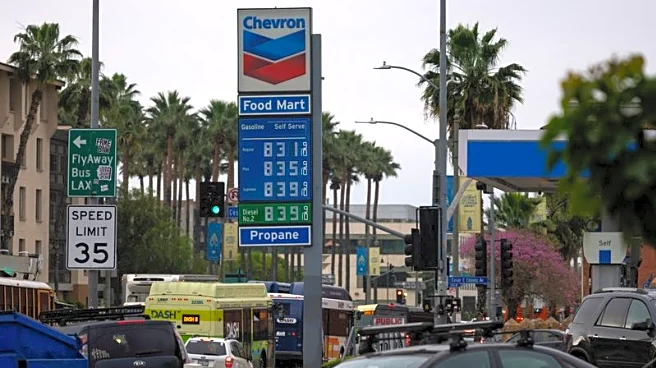
Venezuelan oil to U.S. companies and on international markets, albeit with certain restrictions. Notably, the company is prohibited from selling oil to Russia, Iran, North Korea, and specific Chinese entities. Additionally, the U.S. will manage the cash flow from these transactions through a designated special account. This development comes as American consumers face an average gasoline price of $3.84 per gallon, the highest since 2023.
Why It's Important?
The easing of sanctions on PDVSA is a strategic move by the U.S. to stabilize global oil markets and mitigate the economic impact of rising oil prices on American consumers. By allowing Venezuelan oil to enter the market, the U.S. aims to increase supply and potentially lower prices. This decision reflects the broader geopolitical dynamics, as the U.S. navigates its foreign policy objectives while addressing domestic economic concerns. The move could also have significant implications for Venezuela's economy, providing a potential boost through increased oil revenues, albeit under U.S. financial oversight.
What's Next?
The U.S. Treasury's decision to ease sanctions on PDVSA may lead to further diplomatic engagements with Venezuela, potentially opening avenues for more comprehensive economic cooperation. However, the restrictions on sales to certain countries indicate a cautious approach, balancing economic interests with geopolitical considerations. The global oil market will closely monitor the impact of this policy change on oil prices and supply dynamics. Additionally, the U.S. is contemplating lifting sanctions on Iranian oil, which could further influence global oil supply and pricing.