
What's Happening?
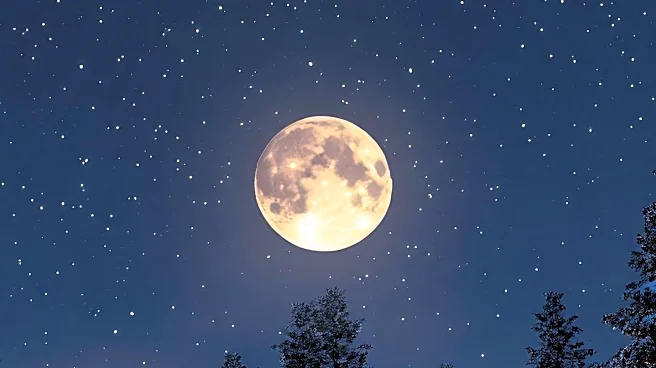
February's full snow moon is set to peak at 5:09 p.m. ET on Sunday, offering a spectacular view as it rises in the eastern sky. Known for the heavy snowfalls typical of this time of year, the snow moon will appear full from Saturday through Monday. This celestial event coincides with preparations for NASA's Artemis II mission, which aims to send astronauts around the moon. The snow moon is part of a series of full moons throughout the year, each with unique names and cultural significance. Sky-gazers are encouraged to observe the moon's features, with telescopes enhancing the viewing experience.
Why It's Important?
The full snow moon provides an opportunity for public engagement with astronomy and space exploration, particularly as NASA advances its Artemis missions.
These missions aim to return humans to the moon, fostering interest in lunar science and exploration. The snow moon's visibility across North America also serves as a cultural touchpoint, connecting people with indigenous traditions and the natural world. This event highlights the ongoing fascination with celestial phenomena and their role in inspiring scientific curiosity and education.
What's Next?
Following the snow moon, sky-gazers can look forward to other full moons and lunar events throughout the year, including supermoons and lunar eclipses. NASA's Artemis II mission, anticipated to launch in February, will further engage the public with lunar exploration. Educational initiatives and public outreach programs may leverage these events to promote interest in space science and technology. The continued observation of lunar phenomena will contribute to a broader understanding of the moon's role in Earth's ecosystem and its potential for future exploration.