








What's Happening?
Consumer Reports has published its annual evaluation of sunscreens for 2026, testing over 100 products including lotions and sprays. The report emphasizes the importance of using sunscreen to protect against ultraviolet B rays, which cause sunburn and contribute
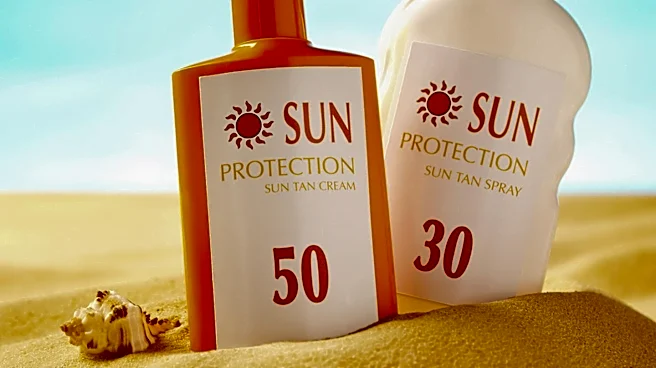
to skin cancer. The testing process involves applying a controlled amount of sunscreen to skin areas and exposing them to UVB rays. This year, Coppertone Water Babies Lotion SPF 50 received a perfect score, while Eucerin Advanced Hydration Spray SPF 50 was the top-rated spray. Consumer Reports advises using broad-spectrum sunscreens with at least SPF 30 and highlights that lotions generally provide better coverage than sprays. The report also notes that many sunscreens do not meet their labeled SPF, but any sunscreen is better than none.
Why It's Important?
The findings from Consumer Reports are significant as they guide consumers in selecting effective sunscreens, which are crucial for skin cancer prevention. With skin cancer being a major health concern, the report's emphasis on broad-spectrum protection and accurate SPF ratings helps consumers make informed choices. The evaluation also underscores the importance of proper application techniques, such as using enough product and reapplying every two hours, to ensure maximum protection. This information is vital for public health, as it encourages better sun safety practices and awareness about the limitations of certain sunscreen products.
What's Next?
As summer approaches, consumers are likely to heed the advice from Consumer Reports and opt for the top-rated sunscreens. Manufacturers may also respond by improving their formulations to meet the expectations set by these evaluations. Additionally, there could be increased scrutiny on product labeling and marketing claims, prompting regulatory bodies to enforce stricter standards. Public health campaigns might also leverage this information to promote sun safety and educate the public on effective sunscreen use.
Beyond the Headlines
The report highlights broader issues in the sunscreen industry, such as the discrepancy between labeled and actual SPF values. This raises questions about regulatory oversight and the need for more stringent testing standards. The convenience of spray sunscreens, despite their drawbacks, points to a consumer preference for ease of use, which could drive innovation in product design. Furthermore, the emphasis on broad-spectrum protection reflects a growing awareness of the need to protect against both UVB and UVA rays, which contribute to skin aging and cancer.