


What's Happening?
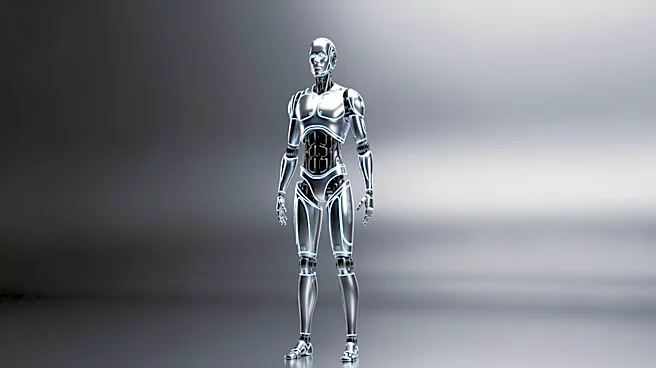
AGIBOT, a robotics company specializing in embodied intelligence, has successfully deployed its AGIBOT G2 robots in a consumer electronics precision manufacturing environment operated by Longcheer Technology. This marks the first large-scale industrial
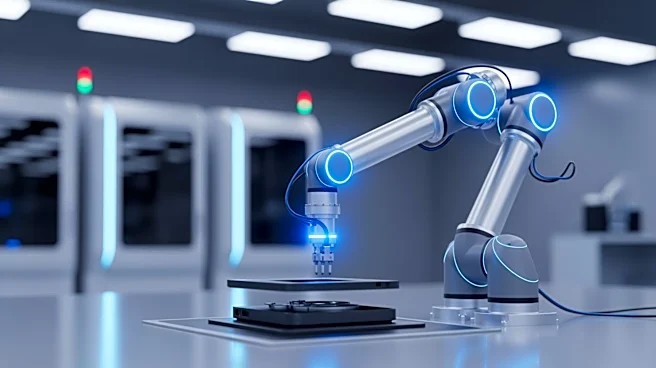
implementation of embodied AI systems in consumer electronics manufacturing. The AGIBOT G2 robots have been integrated into Longcheer's tablet production lines, working alongside human operators. This deployment signifies a shift from experimental to practical, production-ready capabilities, demonstrating the potential of embodied AI to operate reliably under real industrial conditions. The initiative introduces a new approach to manufacturing flexibility, combining general-purpose robotics with AI-driven perception and decision-making, allowing rapid adaptation to dynamic production requirements without extensive hardware reconfiguration.
Why It's Important?
The deployment of embodied AI in manufacturing is significant as it addresses longstanding challenges in the consumer electronics sector, such as rigid production lines and lengthy reconfiguration cycles. By enabling rapid adaptation to changing production demands, the AGIBOT-Longcheer initiative offers a scalable path forward for manufacturing flexibility. This development could lead to increased efficiency and reduced downtime, providing economic value to manufacturers. The successful integration of AI-driven robotics in real-world production environments highlights a broader shift towards flexible, software-driven intelligent systems, potentially transforming manufacturing processes across various industries.
What's Next?
AGIBOT plans to expand the deployment of its robots, aiming to have 100 units operational by the third quarter of 2026. The company is also looking to accelerate the adoption of embodied AI across other industries, including automotive, semiconductors, and energy. This expansion could further validate the effectiveness of embodied AI in diverse manufacturing settings, potentially leading to widespread adoption and innovation in industrial automation.
Beyond the Headlines
The integration of embodied AI in manufacturing could have deeper implications, such as reshaping workforce dynamics by reducing the need for manual labor in repetitive tasks. This technological advancement may also prompt discussions on the ethical use of AI in industrial settings, particularly concerning job displacement and the need for workforce reskilling. Additionally, the success of this initiative could drive further investment in AI and robotics research, fostering innovation and competitiveness in the global manufacturing sector.