
What's Happening?
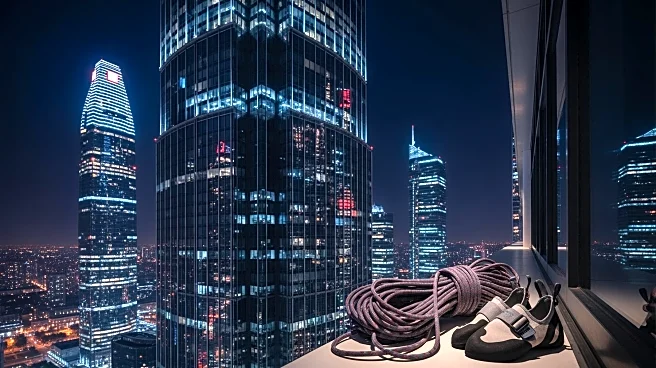
Alex Honnold, renowned for his free solo climbing feats, is undertaking a new challenge by attempting a live, Netflix-documented free solo climb of Taipei 101. Known for his 2017 ascent of Yosemite's El
Capitan without ropes, Honnold has become a global figure in the climbing community. His latest endeavor brings the intensity of free soloing into an urban environment, showcasing his skills on one of the world's tallest buildings. Honnold, who resides in Las Vegas, has a history of living simply to stay close to climbing destinations. His home includes a custom-built climbing gym to maintain his skills during colder months. Beyond climbing, Honnold is committed to environmental sustainability through the Honnold Foundation, which promotes solar energy access worldwide.
Why It's Important?
Honnold's attempt to climb Taipei 101 highlights the growing intersection of extreme sports and media, as platforms like Netflix bring such feats to a global audience. This event not only elevates Honnold's profile but also raises awareness about the sport of free solo climbing. The broadcast could inspire a new generation of climbers and increase interest in climbing as a sport. Additionally, Honnold's environmental advocacy through his foundation underscores the potential for athletes to influence public discourse on sustainability. His efforts to promote solar energy align with broader global initiatives to combat climate change, potentially impacting policy and public attitudes towards renewable energy.
What's Next?
Following the Taipei 101 climb, Honnold may continue to explore urban climbing challenges, potentially inspiring other climbers to pursue similar feats. The success of this event could lead to more collaborations between extreme sports athletes and media platforms, expanding the reach and impact of such endeavors. Honnold's ongoing commitment to environmental causes may also see increased support and funding, furthering the reach of the Honnold Foundation's initiatives. As climbing gains popularity, there may be increased interest in developing urban climbing facilities and events, fostering community engagement and participation in the sport.