



What's Happening?
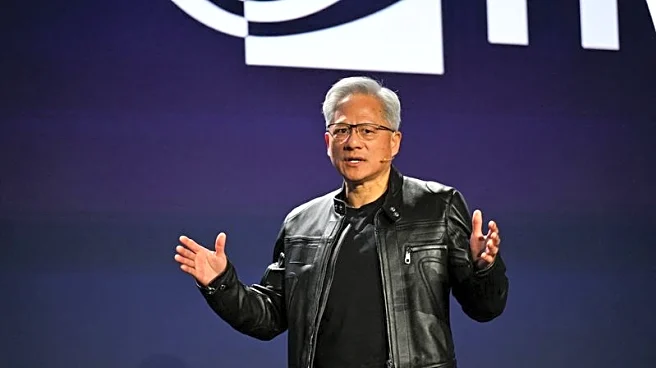
Nvidia CEO Jensen Huang has introduced a novel recruitment strategy involving the use of tokens as an incentive for engineers. During his keynote speech at the GPU Technology Conference, Huang suggested that engineers could receive tokens worth up to half
of their annual salary in addition to their base pay. This approach aims to enhance productivity by providing engineers with a token budget, which is becoming a significant factor in Silicon Valley's competitive talent market. Tokens, in this context, are units used to measure the computing work done by AI, and their allocation is seen as a way to boost engineers' output. Huang's proposal marks a shift in recruitment strategies, as companies look beyond traditional salary and equity packages to attract top talent.
Why It's Important?
The introduction of tokens as a recruitment tool by Nvidia could significantly impact the tech industry's approach to hiring and compensation. As AI and computing power become increasingly valuable, offering tokens could provide companies with a competitive edge in attracting skilled engineers. This strategy reflects a broader trend in Silicon Valley, where companies are exploring innovative ways to secure talent amidst a scarcity of AI compute resources. By incorporating tokens into compensation packages, companies like Nvidia may enhance their appeal to prospective employees, potentially leading to increased productivity and innovation. This development could also influence other tech firms to adopt similar strategies, reshaping the landscape of tech recruitment and compensation.
What's Next?
If Nvidia's token-based recruitment strategy proves successful, it could prompt other tech companies to follow suit, leading to a broader adoption of tokens as a standard component of compensation packages. This shift may also encourage companies to be more transparent about their token budgets in job postings, as suggested by some investors. Additionally, the increasing demand for AI compute resources could drive further innovation in AI technology and infrastructure, as companies seek to maximize the productivity of their engineering teams. The long-term implications of this strategy could include changes in how talent is valued and compensated in the tech industry, potentially influencing global recruitment practices.