





What's Happening?
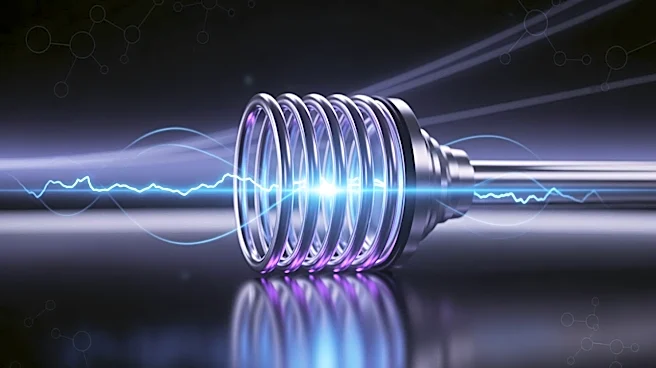
Recent advancements in zinc-ion hybrid supercapacitors (ZIHSCs) have focused on improving the performance of carbon-based electrodes through heteroatom doping and structural engineering. These supercapacitors combine the high power density of supercapacitors with
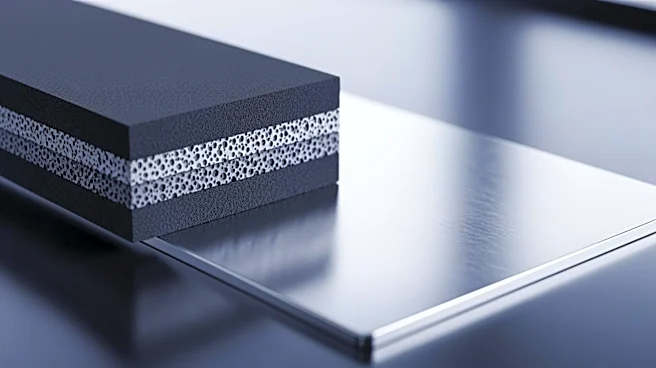
the high energy density of zinc-ion batteries. The introduction of heteroatom doping, such as nitrogen and oxygen, has been pivotal in overcoming performance bottlenecks related to energy storage, ion transport, and cycling stability. The development of porous architectures with high specific surface areas and hierarchical porosity has enabled rapid ion transport and enhanced energy density.
Why It's Important?
The improvements in ZIHSCs are crucial for advancing energy storage technologies, offering potential applications in various sectors, including renewable energy and portable electronics. By enhancing the energy density and cycling stability of these devices, researchers are paving the way for more efficient and sustainable energy solutions. This could lead to reduced reliance on traditional lithium-ion batteries, promoting environmental sustainability and energy efficiency.