
What's Happening?
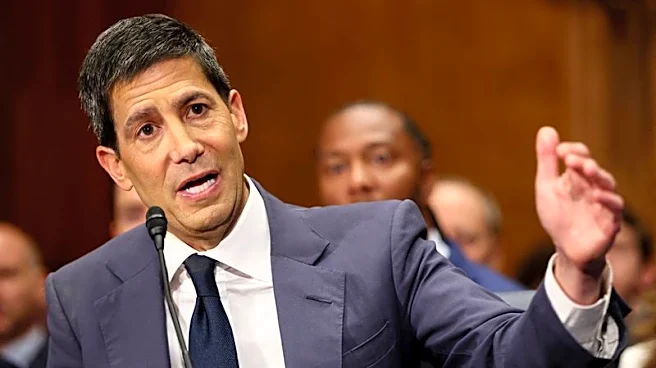
President Trump has nominated Kevin Warsh as the next Federal Reserve chair, with expectations that he will implement interest rate cuts. However, the likelihood of immediate rate reductions is uncertain
due to several factors. Rising inflation, driven by increased oil and gas prices, has reached a two-year high of 3.3%, surpassing the Federal Reserve's target of 2%. This inflationary pressure complicates the case for cutting rates, as the Fed typically maintains or raises rates to combat inflation. Additionally, the unemployment rate remains low at 4.3%, suggesting that the labor market is stable, which further diminishes the urgency for rate cuts. Warsh, who previously advocated for rate cuts, has not made public comments since the onset of the Iran war, which has contributed to the inflation spike.
Why It's Important?
The potential appointment of Kevin Warsh as Federal Reserve chair and the subsequent interest rate policy decisions hold significant implications for the U.S. economy. Interest rate cuts are generally used to stimulate economic activity by making borrowing cheaper, which can boost spending and hiring. However, with inflation rising, maintaining or even increasing rates might be necessary to prevent the economy from overheating. The decision on interest rates will impact various sectors, including housing, automotive, and business investments, as borrowing costs influence consumer and corporate spending. The Federal Reserve's approach to managing inflation and employment will be closely watched by investors, policymakers, and the public, as it affects economic stability and growth prospects.
What's Next?
Kevin Warsh's confirmation as Federal Reserve chair is pending, and his approach to interest rate policy will be scrutinized. The Federal Reserve's rate-setting committee, which includes 12 voters, will play a crucial role in determining the direction of interest rates. Most committee members have expressed reluctance to lower rates amid high inflation, and Warsh will need to navigate these dynamics to build consensus. The committee is expected to keep rates unchanged in the near term, with the possibility of rate cuts being considered if inflation cools and unemployment worsens. Warsh's ability to establish independence from political pressures and articulate a clear policy direction will be critical in shaping the Federal Reserve's monetary policy.