









What's Happening?
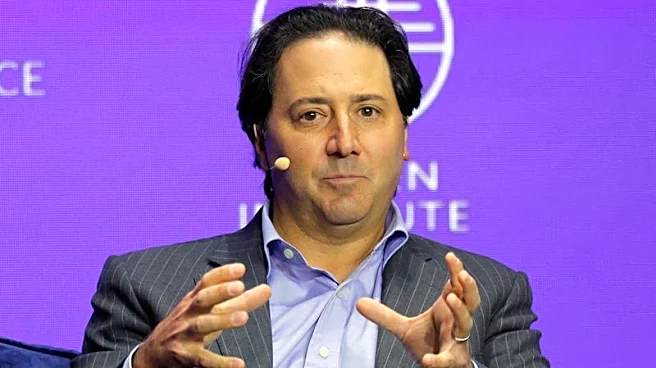
Scott Kleinman, co-president of Apollo Global Management, has highlighted the need for private equity firms to adapt to a new economic environment characterized by higher interest rates and lower valuations. During an interview, Kleinman noted that the industry
had become accustomed to the benefits of near-zero interest rates, which masked valuation risks and allowed for aggressive pricing in dealmaking. As financing conditions normalize, many private equity managers are expected to adjust their expectations on exit values to avoid underperformance. Kleinman pointed out that firms with investments made between 2017 and 2022 are particularly under pressure due to high entry valuations and weaker-than-expected performance. The industry is currently dealing with a backlog of portfolio companies acquired during the low-rate period, making it challenging to realize investments at prices that meet internal return targets.
Why It's Important?
The shift in economic conditions represents a significant challenge for the private equity sector, which must now focus on more disciplined asset selection and operational value creation. The era of relying on rising valuations to generate returns is over, and firms must adapt to a higher interest rate environment. This adjustment is crucial for maintaining profitability and ensuring the sustainability of investments. The changes could lead to a reevaluation of fundraising ambitions and potentially force some firms to exit the market if they cannot meet return expectations. The broader impact on the U.S. economy includes potential shifts in investment strategies and a more cautious approach to dealmaking, which could influence economic growth and job creation.
What's Next?
Private equity firms are expected to continue adjusting their strategies to align with the new economic realities. This may involve a greater emphasis on operational improvements and strategic asset management to enhance value creation. Firms that can successfully navigate these changes may still find opportunities for profitable exits, particularly if they maintain disciplined acquisition pricing. The industry will likely see a period of consolidation, with some firms exiting the market while others strengthen their positions through strategic investments. Stakeholders, including investors and policymakers, will be closely monitoring these developments to assess their impact on the broader financial landscape.