







What's Happening?
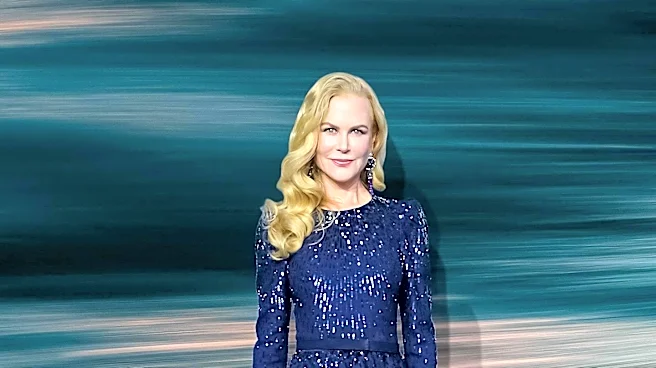
Nicole Kidman, the acclaimed actress, has announced her decision to train as a death doula, a role that involves providing non-medical support to individuals facing death, loss, and mortality. This revelation came during her talk at the University of
San Francisco's Silk Speaker Series. Kidman shared that the inspiration for this new path came after her mother's passing in 2024, highlighting the loneliness her mother experienced despite the family's efforts to provide care. A death doula offers psychosocial, emotional, spiritual, and practical support, as defined by the International End of Life Doula Association. Kidman expressed a desire to expand her capabilities to offer solace and care to those in need, a sentiment echoed by other Hollywood figures like director Chloe Zhao, who has also trained as a death doula.
Why It's Important?
Nicole Kidman's decision to become a death doula underscores a growing awareness and acceptance of end-of-life care roles that focus on emotional and spiritual support. This move highlights a shift in societal attitudes towards death and dying, emphasizing the importance of compassionate care. As a public figure, Kidman's involvement could bring more attention to the role of death doulas, potentially encouraging more people to consider this path and increasing the availability of such services. This development may also influence public discourse on how society approaches death, encouraging more open conversations and reducing the stigma associated with mortality.
What's Next?
As Nicole Kidman embarks on her training to become a death doula, it is likely that her involvement will inspire others in the entertainment industry and beyond to explore similar roles. This could lead to increased interest and demand for death doula services, prompting more training programs and resources to become available. Additionally, Kidman's public platform may facilitate broader discussions on end-of-life care, potentially influencing policy and healthcare practices related to palliative and hospice care. The impact of her decision may extend beyond personal growth, contributing to a cultural shift in how society views and handles the end-of-life process.