
What's Happening?
The agricultural sector is on the brink of a technological transformation as generative AI becomes more integrated into farming practices. Industry leaders such as Reinder Prins from Agworld, Mike Roudi
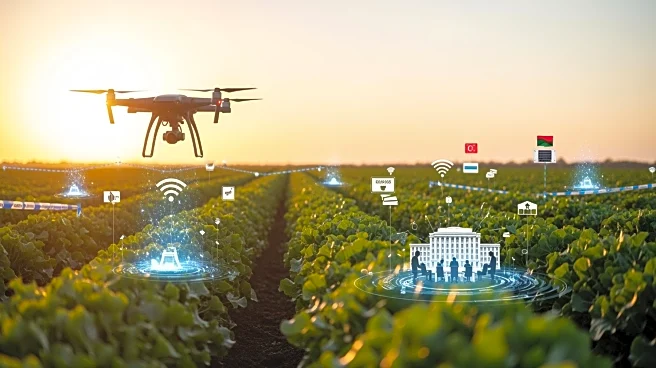
from Emergent Connext, and Tim Hassinger from Intelinair highlight the increasing role of AI in agriculture. Generative AI is expected to act as a conversational agronomy assistant, providing farmers with actionable insights and recommendations. This technology will help translate complex data into farm-specific plans, enhancing decision-making processes. The adoption of smart technology is accelerating, particularly in areas where it has proven to improve margins and reduce costs. The integration of AI is also expected to improve connectivity and interoperability across agricultural systems, with significant advancements in rural IoT networks.
Why It's Important?
The integration of generative AI in agriculture is significant as it promises to enhance productivity and efficiency in farming operations. By providing farmers with precise recommendations and insights, AI can help optimize resource use, reduce waste, and improve crop yields. This technological shift is crucial for addressing the challenges of feeding a growing global population and managing environmental sustainability. The adoption of AI-driven tools can also reduce the administrative burden on farmers, allowing them to focus more on strategic decision-making. As AI becomes more prevalent, it could lead to a more resilient and adaptable agricultural sector, capable of responding to changing environmental and market conditions.
What's Next?
As generative AI continues to develop, its role in agriculture is expected to expand. Future advancements may include more sophisticated AI agents capable of working across multiple systems, further enhancing interoperability and connectivity. The ongoing deployment of rural IoT networks will support this integration, providing reliable coverage and facilitating the use of AI tools. Companies that offer open APIs and avoid proprietary ecosystems are likely to lead the market, as farmers seek flexible and integrated solutions. The continued evolution of AI in agriculture will likely drive further innovation and investment in the sector.
Beyond the Headlines
The adoption of generative AI in agriculture raises important ethical and cultural considerations. As technology becomes more embedded in farming practices, there is a need to ensure that it is accessible to all farmers, regardless of size or location. The potential for AI to replace human labor also poses questions about the future of work in agriculture and the need for workforce retraining. Additionally, the reliance on AI-driven systems highlights the importance of data privacy and security, as well as the need for transparent and accountable AI models.