

What's Happening?
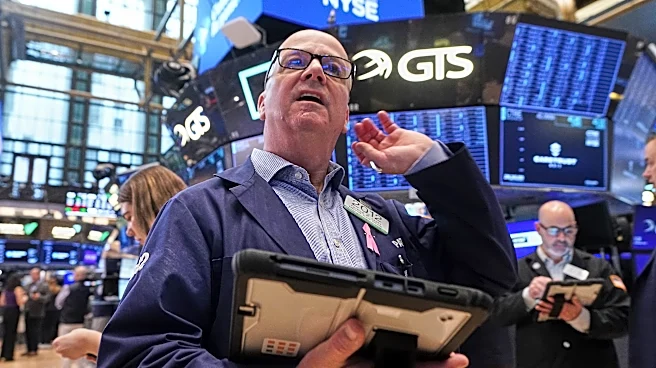
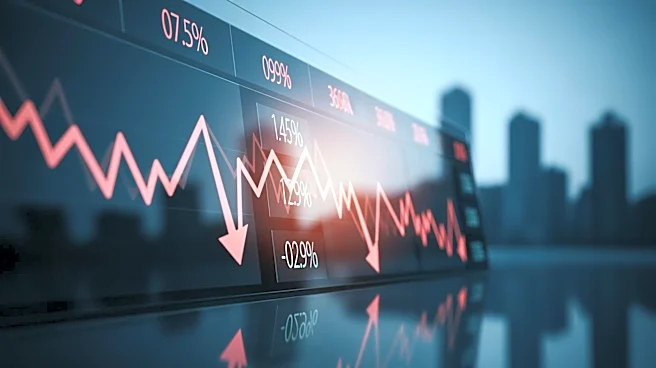
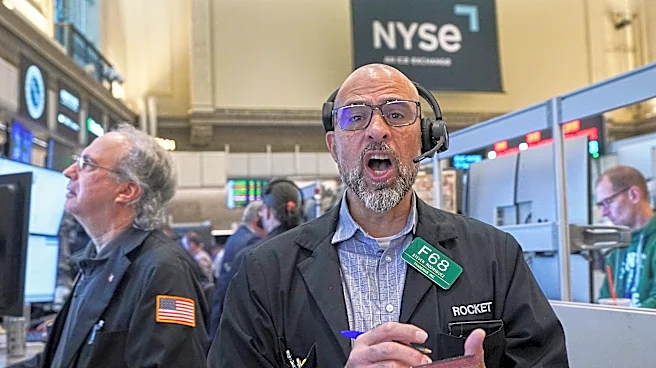
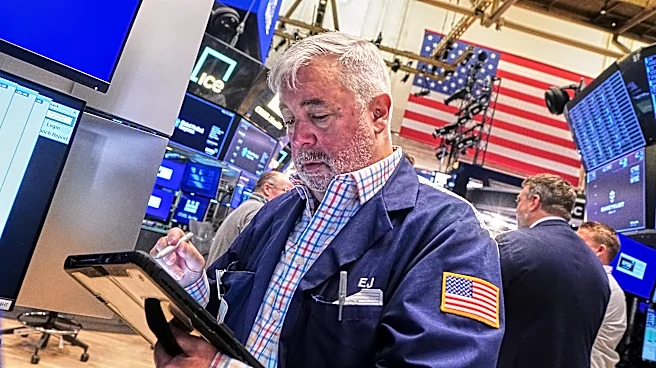
On May 15, 2026, Wall Street experienced a significant downturn as major indexes fell sharply. The Dow Jones Industrial Average dropped over 500 points, while the S&P 500 and Nasdaq Composite also saw declines of more than 1% and 1.5%, respectively. This
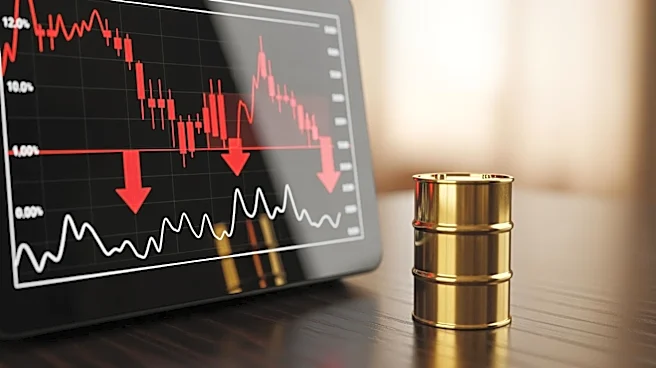
selloff was driven by a sharp increase in Treasury yields, with the 30-year yield surpassing 5.1%, a level not seen in nearly two decades. Additionally, oil prices surged due to escalating tensions with Iran, as President Trump expressed impatience with the situation, raising concerns about potential disruptions in the Strait of Hormuz. The market's reaction was compounded by recent inflation data that exceeded expectations, leading investors to reconsider the Federal Reserve's future interest rate decisions.
Why It's Important?
The decline in Wall Street indexes highlights investor concerns over multiple economic and geopolitical factors. Rising Treasury yields suggest increased borrowing costs, which can negatively impact stock valuations and economic growth. The surge in oil prices, driven by fears of disruptions in the Strait of Hormuz, could lead to higher energy costs, further fueling inflation. These developments come at a time when the Federal Reserve's monetary policy is under scrutiny, with potential implications for future interest rate hikes. The market's reaction underscores the fragility of investor confidence amid geopolitical tensions and economic uncertainty, affecting both individual and institutional stakeholders.
What's Next?
Investors will closely monitor geopolitical developments, particularly regarding U.S.-Iran relations and the potential impact on global oil supplies. The Federal Reserve's response to rising inflation and market volatility will also be pivotal, as any indication of future rate hikes could further influence market dynamics. Additionally, corporate earnings reports and economic data releases will be scrutinized for signs of resilience or vulnerability in the face of these challenges. Stakeholders, including policymakers and business leaders, may need to adapt strategies to navigate the evolving economic landscape.