








What's Happening?
The logistics and supply chain industry is undergoing significant transformation as revealed in the latest survey by Inbound Logistics. The integration of artificial intelligence (AI) as a core component of enterprise execution is a major trend, with
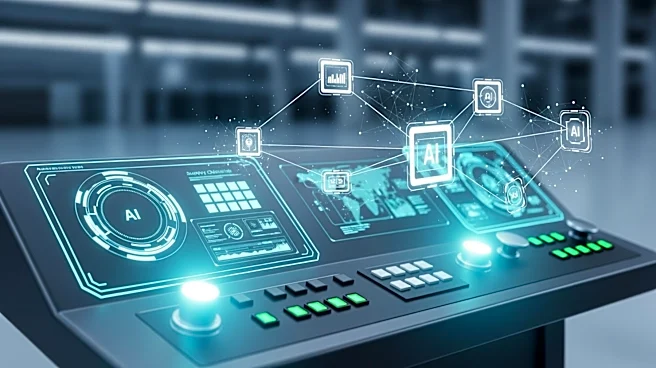
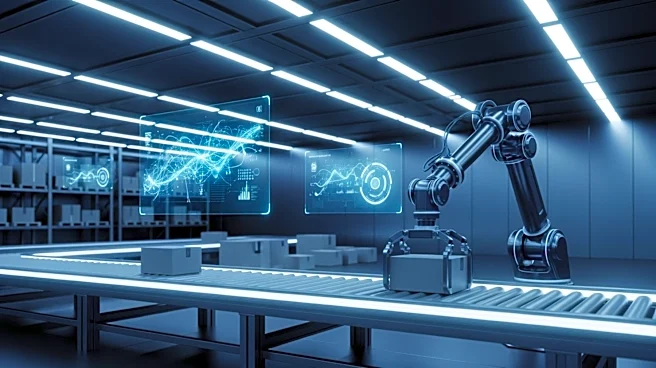
AI no longer being a standalone feature but a foundational element. Companies like Aera Technology and Decklar are leading this shift by offering decision intelligence agents that enhance logistics efficiency. The labor shortage has accelerated the adoption of robotics and workforce coordination in warehouses, with systems like Lucas Systems' AI engine, Jennifer, optimizing operations. The focus is shifting towards brownfield modernization, where existing warehouse systems are enhanced rather than replaced, to increase capacity and flexibility. This approach is supported by companies like LogistiVIEW and Lucas Systems. Additionally, there is a move towards smaller, adaptable network designs and local sourcing to reduce risks and improve response times.
Why It's Important?
The advancements in supply chain technology are crucial for maintaining competitiveness in a global market that is increasingly complex. The integration of AI and robotics not only reduces costs but also enhances operational efficiency, which is vital for companies facing economic pressures. The shift towards brownfield modernization allows businesses to maximize their existing investments, providing a cost-effective way to improve logistics capabilities. This is particularly important as companies navigate challenges such as labor shortages and the need for more resilient supply chains. The emphasis on local sourcing and distributed fulfillment helps mitigate risks associated with global disruptions, ensuring more reliable service delivery. These technological advancements are likely to have a significant impact on U.S. industries, particularly in terms of cost savings and improved supply chain resilience.
What's Next?
As these technologies continue to evolve, companies will likely increase their investment in AI and robotics to further enhance their logistics operations. The focus on brownfield modernization suggests that businesses will prioritize upgrading existing systems over building new ones, which could lead to more sustainable and efficient supply chain practices. The trend towards local sourcing and distributed fulfillment is expected to grow, potentially reshaping the logistics landscape by reducing dependency on global supply chains. Stakeholders, including logistics providers and technology companies, will need to collaborate to develop solutions that address the evolving needs of the industry. This could lead to new partnerships and innovations that further drive efficiency and resilience in supply chains.