





What's Happening?
Fulton Leroy Washington, known as Mr. Wash, is spearheading a project to build a $15 million community arts center in Compton, California. The center aims to support formerly incarcerated artists by providing housing, studio space, and resources. Mr. Wash, who
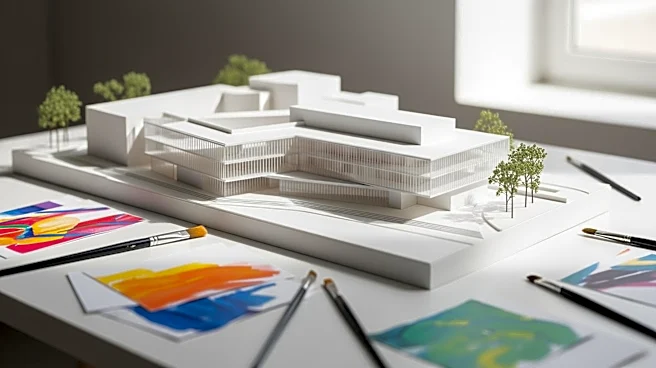
spent 21 years in prison for a nonviolent drug offense before his sentence was commuted by President Obama in 2016, is using his latest exhibition, 'The City of Compton: Then & Now,' as a fundraiser for the center. The proposed facility, designed by Morphosis Architects, will include artist studios, an art supply store, and a small-business incubator. The project is still in its conceptual phase, with its timeline dependent on fundraising efforts.
Why It's Important?
The initiative by Mr. Wash highlights the potential of art as a tool for rehabilitation and community development. By focusing on formerly incarcerated individuals, the center aims to provide a positive pathway for reintegration into society, addressing issues of public safety and economic opportunity. The project aligns with Compton's priorities and could serve as a model for similar initiatives nationwide. It also seeks to change the narrative around Compton, showcasing the city's creativity and resilience. The center's development could attract art collectors and investors, further boosting the local economy and cultural landscape.
What's Next?
The next steps for the project involve securing substantial funding from individuals and foundations to bridge the gap between current resources and the $15 million needed for construction. Mr. Wash continues to engage the community through events and exhibitions, aiming to generate excitement and support for the center. Potential collaboration with the city of Compton could also be explored to further the project's goals. As the project progresses, it may inspire similar efforts in other communities, promoting art as a means of social change and rehabilitation.
Beyond the Headlines
The project underscores the broader cultural and ethical implications of using art as a rehabilitative tool. It challenges societal perceptions of formerly incarcerated individuals, emphasizing their potential for positive contributions to society. The center could foster a sense of community and belonging, providing a supportive environment for artistic expression and personal growth. By integrating art into civic infrastructure, the initiative reflects a growing trend of using creative spaces to address social issues and promote community engagement.