
What's Happening?
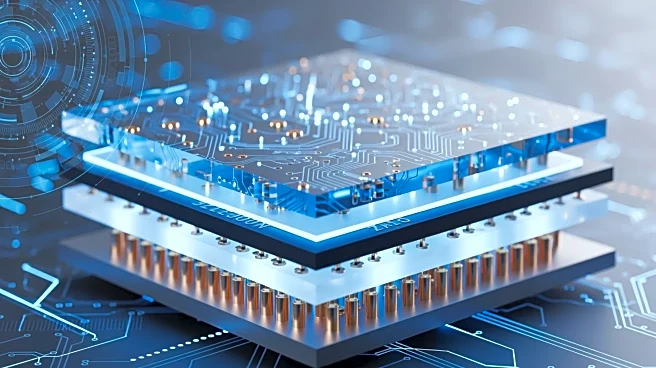
PCBAIR has announced the introduction of its advanced 8-layer Glass Core PCB manufacturing capabilities, which incorporate proprietary Through Glass Via (TGV) technology and multi-layer redistribution
layers (RDL). This innovation is designed to address the interconnect density limitations of traditional organic substrates, particularly in the fields of artificial intelligence (AI) and high-performance computing (HPC). The new glass substrates offer superior signal integrity and thermal stability, making them suitable for AI accelerators, high-speed data center servers, and optical transceivers. The company has commenced pilot production and customer sampling, aiming to enhance mechanical reliability and reduce signal loss through specific innovations in glass processing, metallization, and stacking.
Why It's Important?
The introduction of glass core PCBs by PCBAIR represents a significant advancement in the electronics manufacturing industry, particularly for sectors reliant on high-density interconnect solutions. By moving from organic to glass cores, PCBAIR is providing a stable foundation for demanding compute workloads, which is crucial for the continued development and scaling of AI and HPC technologies. This innovation could lead to improved performance and reliability of electronic devices, potentially reducing costs associated with traditional silicon interposers. The compatibility of these PCBs with existing substrate assembly lines also ensures a smoother transition for manufacturers, mitigating supply chain risks and enhancing the adoption of glass-based technology.
What's Next?
PCBAIR's Glass Core PCBs are expected to gain traction among chip designers and manufacturers looking to overcome current packaging bottlenecks. As the technology is fully compatible with existing assembly lines, it is likely that more companies will adopt this solution to enhance their product offerings. The company’s turnkey solution, which includes handling delicate manufacturing and assembly processes, positions PCBAIR as a key player in the transition to glass-based substrates. This could lead to increased collaborations and partnerships within the industry, further driving innovation and efficiency in electronic manufacturing.