

What's Happening?
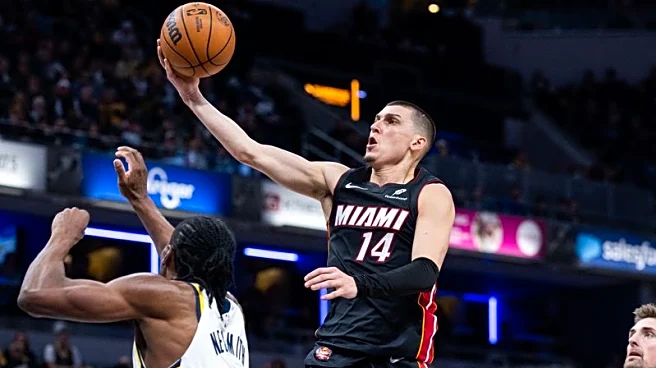
Miami Heat guard Tyler Herro has been labeled as one of the NBA's most overrated players by Bleacher Report's Greg Swartz. Despite achieving All-Star status and winning Sixth Man of the Year before turning 26, Herro's performance this season has been marred by injuries, limiting him to just 11 games out of 56. Swartz argues that Herro's scoring ability is overshadowed by his defensive limitations and durability issues, suggesting that the Heat's success in reaching the Finals in 2023 without him indicates his overrated status. Herro's career has seen him play 70 games in a season only once, raising questions about his reliability as a max-caliber player.
Why It's Important?
The assessment of Tyler Herro as overrated has implications for the Miami Heat's strategy
and player valuation. If Herro is indeed overrated, it could affect his trade value and the team's decisions regarding his future role. The criticism highlights the evolving NBA landscape where one-way scoring guards with defensive vulnerabilities are less valued. This shift could influence how teams build their rosters, prioritizing players with more balanced skill sets. Herro's situation underscores the importance of durability and defensive capabilities in player evaluations, impacting contract negotiations and team dynamics.
What's Next?
The Miami Heat may need to reassess Tyler Herro's role and consider exploring trade options if his perceived value continues to decline. The team could focus on developing or acquiring players who offer more consistent performance and defensive prowess. Herro's future with the Heat might depend on his ability to overcome injury challenges and improve his defensive game. The team's management will likely monitor his progress closely, weighing the benefits of retaining him against potential trade opportunities that could strengthen their roster.
Beyond the Headlines
The discussion around Tyler Herro's overrated status raises broader questions about player evaluation in the NBA. It highlights the shift towards valuing players who contribute on both ends of the court, reflecting changes in team strategies and league dynamics. This trend may lead to a reevaluation of how players are scouted and developed, emphasizing versatility and durability. Herro's case also illustrates the pressure on young players to meet high expectations and the impact of injuries on their career trajectories.