






What's Happening?
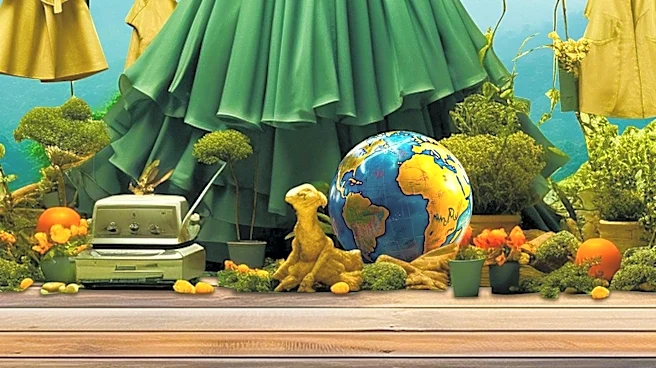
Designer Eugène Riconneaus has introduced a groundbreaking couture dress made from a scalable seaweed-based textile at the Grand Palais in Paris. This innovative material, developed through his ER Ocean Recherche project, represents a significant advancement
in sustainable fashion. The dress, named 'Ocean Apocalypse,' showcases the potential of marine biomass-derived fibers, which Riconneaus began developing during the pandemic. These fibers, known as SeiFibre and SeiYarn, are produced using algae and cyanobacteria, and can be transformed into various textile forms, including yarns and fabrics. The material has demonstrated antibacterial properties and is ready for commercial scaling, with partnerships established with mills and textile producers across Europe. Riconneaus emphasizes the importance of collaboration between designers and scientists to drive innovation and creativity in the fashion industry.
Why It's Important?
The introduction of seaweed-based textiles by Eugène Riconneaus marks a significant step forward in the sustainable fashion industry. As environmental concerns continue to rise, the fashion sector faces increasing pressure to adopt eco-friendly practices. This development could lead to a reduction in the reliance on traditional, resource-intensive materials, offering a more sustainable alternative. The scalability of these fibers means they can be integrated into various fashion applications, potentially transforming the industry by providing designers with new materials that are both functional and environmentally responsible. This innovation not only addresses sustainability but also encourages collaboration between designers and scientists, fostering a culture of creativity and technological advancement.
What's Next?
Eugène Riconneaus plans to expand the use of Sei materials beyond the couture dress, with intentions to present a larger collection during Paris Fashion Week. The ongoing development of these fibers includes refining dyeing processes and exploring their application in different types of clothing, from casualwear to complex weaves. As the material gains traction, it is expected that more designers and brands will adopt these sustainable practices, potentially leading to widespread changes in the fashion industry. The success of this initiative could inspire further research and development in sustainable textiles, driving the industry towards more environmentally friendly solutions.
Beyond the Headlines
The use of seaweed-based fibers in fashion not only addresses environmental concerns but also highlights the potential for innovation in material science. This development could lead to a shift in how fashion brands approach sustainability, encouraging them to invest in research and development to create new materials. The collaboration between designers and scientists exemplifies a model that could be applied across various industries, promoting interdisciplinary partnerships to solve complex challenges. Additionally, the success of this initiative may influence consumer behavior, as more individuals seek out sustainable fashion options, thereby driving demand for eco-friendly products.