


What's Happening?
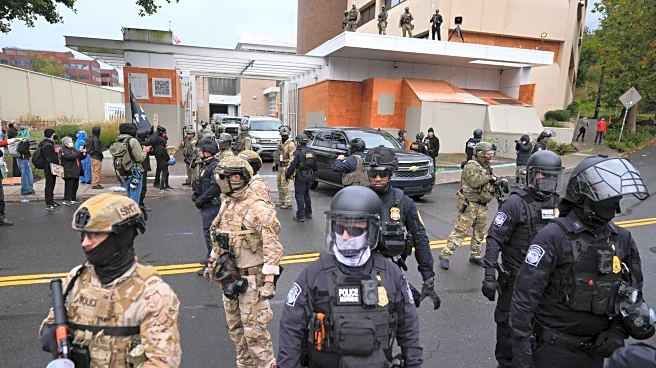
A report by Skift highlights the challenges faced by US hotel franchises due to Immigration and Customs Enforcement (ICE) operations in Minneapolis. The report focuses on 'Operation Metro Surge,' where a suburban Hampton Inn in Lakeville, Minnesota, was stripped of its franchise agreement after refusing to accommodate ICE agents. This decision led to the hotel losing its Hilton branding and access to its reservation system. The incident underscores the tension between federal authorities, hotel brands, and workers. Protests have erupted at hotels believed to be housing ICE agents, leading to arrests and property damage. The Sunrise Movement has been actively organizing protests and disruptions at these locations. The situation is further complicated
by the fact that a significant portion of the hotel workforce comprises immigrants, leading to labor unrest and operational challenges.
Why It's Important?
The ICE operations and subsequent protests have significant implications for the US hotel industry, particularly for franchisees. Hotels are caught in a difficult position, balancing federal law enforcement demands with brand reputation and workforce stability. Accepting ICE bookings can lead to protests and damage, while refusing them can result in losing franchise agreements. This situation highlights the broader issue of immigration enforcement intersecting with business operations, potentially affecting the hospitality sector's stability. The financial impact is also notable, with fluctuating occupancy rates and average daily rates in affected areas. The ongoing tension could influence future franchise agreements and operational strategies, especially with major events like the World Cup on the horizon.
What's Next?
As President Trump has indicated plans for similar operations in additional cities, hotel franchises across the US may face similar challenges. The industry must navigate the legal and ethical implications of cooperating with federal authorities while maintaining brand integrity and workforce morale. Hotels may need to establish clearer policies regarding law enforcement interactions to protect their interests and those of their employees. The potential for increased protests and disruptions during major events like the World Cup could further complicate the situation, requiring proactive measures from both hotel operators and law enforcement agencies.
Beyond the Headlines
The situation raises important questions about the balance of power in franchise agreements and the rights of franchisees. The elasticity of franchise contract language allows brands to terminate agreements based on perceived reputational harm, leaving franchisees with little bargaining power. This dynamic could lead to increased scrutiny of franchise agreements and calls for more equitable terms. Additionally, the intersection of immigration enforcement with business operations highlights the broader societal debate over immigration policy and its impact on various sectors. The hospitality industry may need to advocate for clearer guidelines and protections to navigate these complex issues effectively.