



What's Happening?
Kyler Murray's recent signing with the Minnesota Vikings includes a notable clause that could significantly impact his future with the team. The contract prevents the Vikings from using the franchise or transition tag on Murray next offseason, allowing
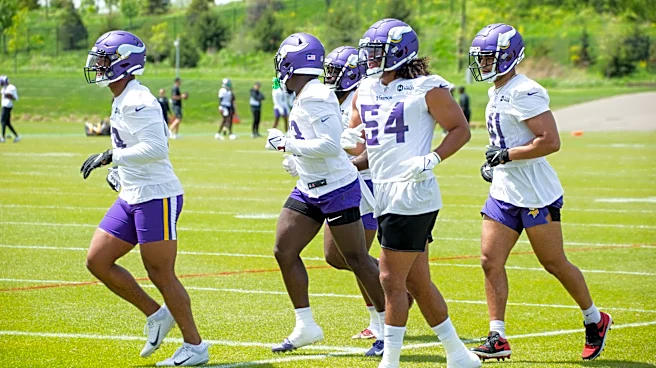
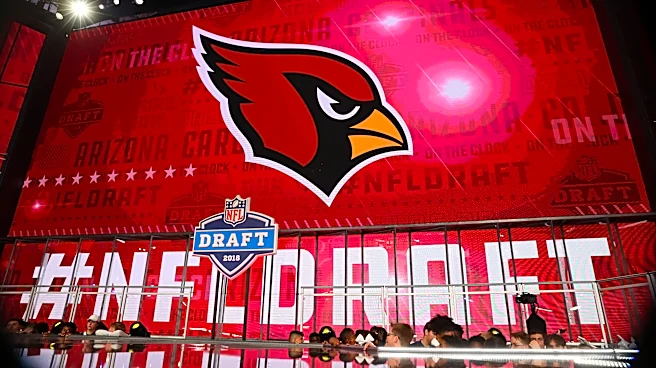
him to enter the open market if he performs well. This clause was reportedly requested by Murray and granted by the Vikings, who are eager to see how he performs this season. The Vikings acquired Murray on a veteran's minimum contract, benefiting from the Arizona Cardinals' financial obligations to him. This strategic move aims to bolster the Vikings' quarterback position following a challenging season.
Why It's Important?
The inclusion of a no-tag clause in Murray's contract is significant as it provides him with greater leverage and flexibility in his career decisions. For the Vikings, this move represents a calculated risk, banking on Murray's potential to elevate the team's performance. If successful, Murray's presence could enhance the Vikings' competitiveness in the NFL, potentially leading to a playoff run. However, the clause also means the Vikings could face stiff competition from other teams if they wish to retain him beyond this season. This scenario underscores the evolving dynamics of player contracts in the NFL, where athletes seek more control over their career trajectories.
What's Next?
As the season progresses, all eyes will be on Murray's performance with the Vikings. A strong showing could increase his market value, leading to a bidding war among NFL teams. The Vikings will need to assess their long-term strategy, balancing the desire to retain Murray with the financial implications of a potential new contract. Meanwhile, other teams will monitor the situation closely, preparing to make offers if Murray becomes available. This development could influence future contract negotiations across the league, as players and teams navigate the complexities of free agency and salary cap management.