



What's Happening?
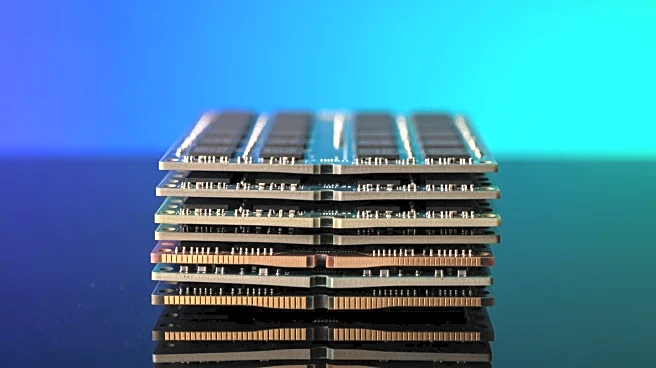
Micron, a leading memory and storage company, is experiencing significant challenges in meeting the demand for its DRAM and NAND products. According to CEO Sanjay Merhotra, the demand for these memory components is expected to exceed supply for the foreseeable
future. This imbalance is anticipated to impact the production of PCs and smartphones, potentially leading to a decline in unit sales by low double-digit percentages in 2026. To address this issue, Micron has acquired a semiconductor facility in Tongluo, Taiwan, which is expected to begin meaningful product shipments by 2028. Additionally, the company plans to construct a second cleanroom in this facility by 2027 and increase wafer output at its Idaho fab by mid-2027. Despite these efforts, the supply constraints are likely to persist, driven by the growing demand for memory in AI applications.
Why It's Important?
The ongoing supply constraints in the memory market have significant implications for various industries, particularly technology and consumer electronics. As memory components are crucial for the production of PCs and smartphones, the shortage could lead to increased prices and reduced availability of these products. This situation may also affect the broader tech industry, including sectors like automotive and industrial applications, which rely on memory for their operations. The persistent demand for memory, fueled by advancements in AI, underscores the critical role of these components in modern technology. Companies that can navigate these supply challenges effectively may gain a competitive edge, while those unable to secure sufficient memory supplies could face operational disruptions and financial setbacks.
What's Next?
Micron's strategic investments in expanding its production capacity are aimed at alleviating the supply-demand gap in the long term. However, these efforts will take several years to materialize fully. In the short term, the company is working closely with its customers to manage product mixes and optimize the use of available memory supplies. The tech industry will likely continue to experience volatility in memory pricing and availability until these supply issues are resolved. Stakeholders, including manufacturers and consumers, will need to adapt to these market conditions, potentially exploring alternative solutions or technologies to mitigate the impact of the memory shortage.