









What's Happening?
Nevada Organic Phosphate (CSE:NOP) has expanded its exploration efforts in Nevada, USA, by securing three new applications for phosphate prospecting. This expansion adds 6,011 acres to its existing Nevagro Permit, which covers 1,813 acres. The company's
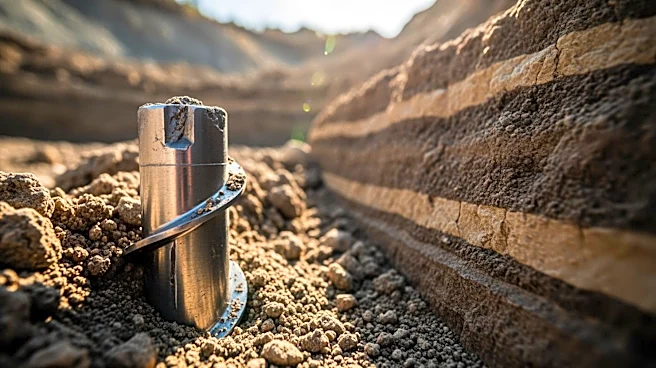
CEO, Robin Dow, attributes this growth to meticulous geological work and adherence to regulatory processes. The company is currently collaborating with environmental consultants to meet the National Environmental Policy Act requirements, essential for obtaining exploration permits from the Bureau of Land Management. The Murdock Mountain Project, a key focus area, has seen six drill holes completed, yielding an average grade of 10.95% phosphorous pentoxide over a true thickness of 4.20 meters. This aligns with the geological model for the Upper Phosphatic Zone, enhancing the company's understanding of the area's mineral potential.
Why It's Important?
The expansion of Nevada Organic Phosphate's exploration activities is significant for the U.S. phosphate industry, potentially increasing domestic phosphate resources. This development could reduce reliance on imported phosphate, crucial for agriculture and various industrial applications. The company's commitment to regulatory compliance and environmental stewardship sets a precedent for responsible resource exploration. The successful identification and development of phosphate resources in Nevada could bolster local economies, create jobs, and contribute to the U.S. strategic mineral reserves. As the demand for phosphate continues to grow, this expansion positions Nevada Organic Phosphate as a key player in meeting future supply needs.
What's Next?
Nevada Organic Phosphate plans to continue its exploration activities at the Murdock Mountain Project, focusing on evaluating the strike, thickness, lateral continuity, and grade characteristics of the Meade Peak Upper Phosphate Zone. The company aims to gather sufficient geological, structural, and analytical data to prepare a mineral resource estimate in accordance with NI 43-101 standards. This ongoing work will build the technical confidence necessary for future development decisions. As the company progresses, it will likely engage with stakeholders, including local communities and regulatory bodies, to ensure sustainable and responsible resource development.