



What's Happening?
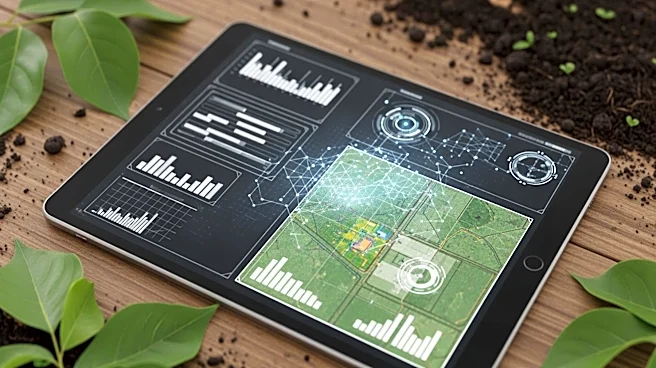
ITC has announced the success of its ITCMAARS digital agriculture platform, which utilizes an AI-based feature called 'Crop Doctor' to help farmers identify crop diseases and pest infestations. This tool supports up to 70 crops and uses AI and machine
learning-based image analytics to provide crop management recommendations. The platform, launched in 2022, has reached approximately 2.5 million farmers and 2,180 Farmer Producer Organizations across 11 states. ITC claims that the initiative has led to a 10-15% reduction in fertilizer use and a 15-20% increase in crop yields, resulting in a 25% rise in farm incomes. The platform also includes features like a Crop Calendar, Fertiliser Calculator, and 'Krishi Mitra', an AI-powered advisory tool developed with Microsoft.
Why It's Important?
The ITCMAARS platform represents a significant advancement in agricultural technology, particularly in the context of climate change and pest risks. By providing farmers with AI-driven tools to manage crop health, the platform not only enhances food security but also boosts economic outcomes for farmers. The reduction in fertilizer use and increase in crop yields contribute to more sustainable farming practices, which are crucial for long-term agricultural viability. The platform's ability to support multiple languages and provide localized information further empowers farmers across diverse regions, potentially transforming agricultural productivity and sustainability.
What's Next?
As the ITCMAARS platform continues to expand, it is likely to reach more farmers and regions, further enhancing its impact on agricultural productivity and sustainability. The ongoing development of AI tools and features could lead to even more precise and effective crop management solutions. Additionally, the platform's success may encourage other companies and governments to invest in similar technologies, potentially leading to widespread adoption of AI in agriculture. This could result in significant shifts in farming practices and economic models within the agricultural sector.
Beyond the Headlines
The integration of AI in agriculture raises important ethical and cultural considerations, such as data privacy and the potential displacement of traditional farming knowledge. As technology becomes more embedded in farming practices, there is a need to ensure that it complements rather than replaces the expertise of local farmers. Additionally, the reliance on digital platforms necessitates robust infrastructure and internet access, which may not be uniformly available in all regions. Addressing these challenges will be crucial to ensuring equitable access to the benefits of agricultural technology.