

What's Happening?
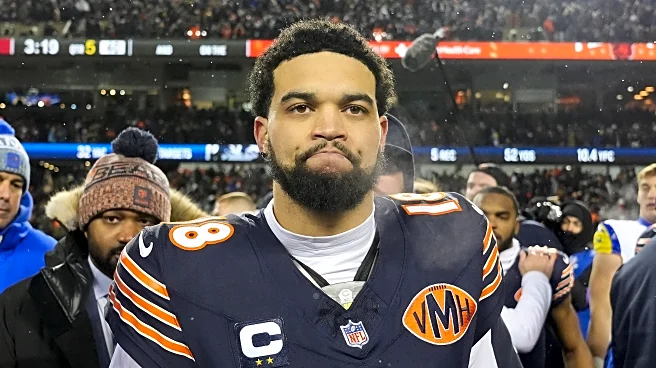
A new legislative proposal, known as the 'Home Team Act,' has been introduced in Congress to prevent sports teams from relocating without first offering local stakeholders the opportunity to purchase the team. This bill is particularly relevant to the Chicago
Bears, who are currently considering a move to Indiana as part of their efforts to secure a new domed stadium. The bill, co-sponsored by Democratic Representative Greg Casar, is being described as a 'keep-the-Bears-in-Chicago' initiative. Casar argues that the threat of relocation often leads to a 'race to the bottom,' where billionaire team owners pit taxpayers against each other to secure public funding. The bill aims to halt such practices by ensuring that fans and local communities have a chance to retain their teams.
Why It's Important?
The introduction of the 'Home Team Act' highlights the ongoing debate over public funding for sports stadiums and the economic impact of team relocations. If passed, the bill could set a precedent for how professional sports teams negotiate with cities and states, potentially reducing the leverage teams have in securing taxpayer-funded stadiums. This could have significant financial implications for both the sports industry and local governments. For the Chicago Bears, the bill could complicate their plans to move to Indiana, affecting their negotiations for a new stadium. The broader impact could see other teams reconsidering relocation strategies, knowing that local communities might have a say in the process.
What's Next?
The bill's future in Congress remains uncertain, as it will require bipartisan support to advance. Representative Casar has expressed optimism about gaining such support, particularly from Illinois lawmakers. However, the bill faces challenges, including potential opposition from those who believe Congress should prioritize other issues. If the bill gains traction, it could lead to increased scrutiny of team relocation practices and potentially inspire similar legislative efforts in other states. The outcome will be closely watched by sports franchises, local governments, and fans alike.