
What's Happening?
SpaceX conducted the first launch of its third-generation Starship system, marking a significant step in its space exploration efforts. The launch, which took place from SpaceX's new pad in South Texas,
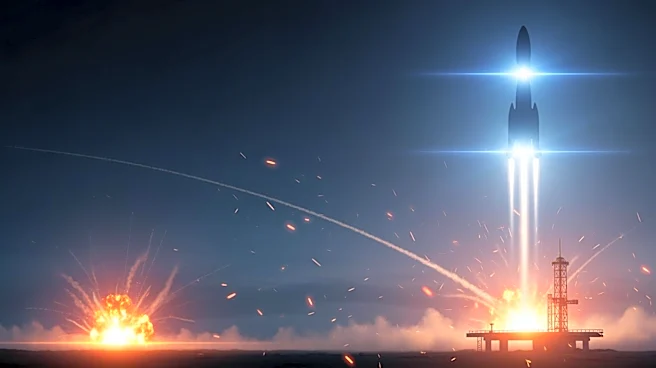
saw the Super Heavy booster lift off successfully. However, the mission experienced mixed results. While all 33 Raptor 3 engines on the booster initially operated as planned, one engine shut down prematurely. The spacecraft continued its journey into space, but one of its three vacuum engines also failed, requiring the remaining engines to compensate by burning longer. Despite these setbacks, the spacecraft reached its intended velocity and deployed 20 dummy satellites and two additional satellites for testing purposes. The mission concluded with the spacecraft reentering the atmosphere and performing a soft-landing simulation over the sea, which ended in an explosion likely due to excess fuel.
Why It's Important?
This launch represents a critical milestone for SpaceX as it continues to develop its Starship system, which is central to its ambitions of lunar and Martian exploration. The successful aspects of the launch, such as the deployment of test satellites and the spacecraft's ability to withstand reentry, demonstrate progress in SpaceX's engineering capabilities. However, the engine failures and booster crash highlight ongoing challenges that need to be addressed. The outcome of this test flight has implications for SpaceX's competition with Blue Origin in NASA's Artemis program, which aims to return humans to the Moon. The ability to reliably launch and land the Starship is crucial for future missions, including potential crewed lunar landings.
What's Next?
Following the partial success of this launch, SpaceX is expected to conduct further tests to refine the Starship system. The company will likely focus on resolving the issues that led to the engine failures and the booster crash. Future launches may continue to test sea landings before attempting more complex maneuvers, such as catching the booster on the launch tower. Additionally, SpaceX will need to demonstrate an uncrewed docking mission with NASA's Orion spacecraft and conduct uncrewed and crewed lunar landings as part of the Artemis program. These steps are essential for SpaceX to secure its role in NASA's plans for lunar exploration.