
What's Happening?
The Augusta Chronicle conducted a price comparison of traditional Christmas dinner items across three major grocery stores: Kroger, Publix, and Walmart. This analysis comes in the context of a reported
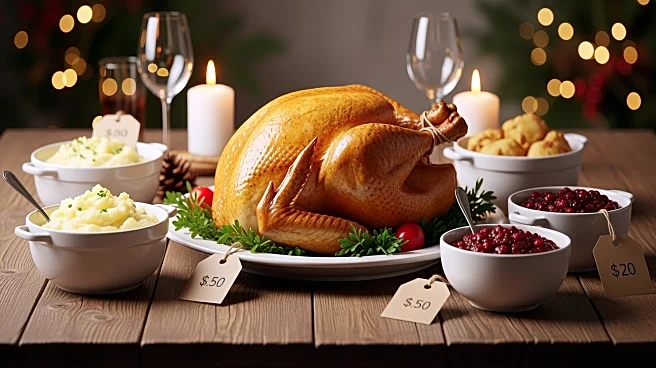
3% increase in overall food prices in the U.S. for 2025, as estimated by the U.S. Department of Agriculture. Factors contributing to this rise include increased labor costs, supply chain disruptions, weather conditions, and tariffs. The Chronicle's comparison revealed that Walmart offers the most affordable option for a Christmas dinner, with a total cost of $38.70, followed by Kroger at $43.35, and Publix at $49.52. Key items compared include Butterball turkey, Southern Comfort Egg Nog, russet potatoes, fresh Brussels sprouts, Heinz turkey gravy, Ocean Spray cranberry sauce, Stove Top turkey stuffing, and frozen pecan pie.
Why It's Important?
The rising cost of food is a significant concern for American consumers, particularly during the holiday season when families gather for traditional meals. The USDA's report of a 3% increase in food prices, outpacing general inflation, highlights the economic pressures faced by households. This price comparison provides valuable insights for consumers looking to manage their holiday budgets effectively. The differences in pricing among major retailers like Walmart, Kroger, and Publix can influence consumer shopping behavior and impact the competitive dynamics within the grocery industry. As food prices continue to rise, consumers may increasingly seek out the most cost-effective options, potentially affecting the market share of these retailers.
What's Next?
As food prices remain a critical issue, grocery stores may need to adjust their pricing strategies to remain competitive and attract budget-conscious consumers. Retailers might also explore ways to mitigate the impact of rising costs, such as optimizing supply chains or offering promotions. Consumers, on the other hand, may continue to seek out price comparisons and discounts to manage their expenses. The ongoing economic conditions could prompt further analysis and reporting on food pricing trends, providing consumers with the information needed to make informed purchasing decisions.