


What's Happening?
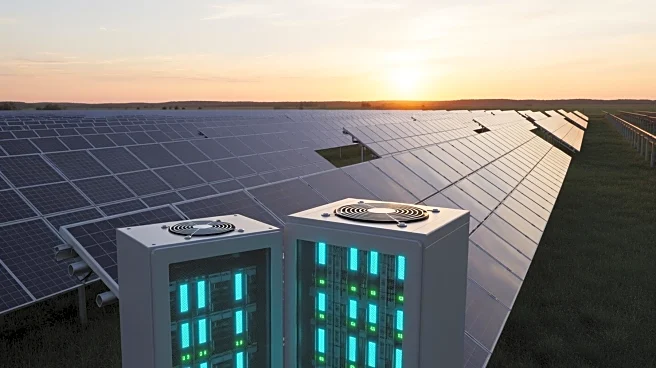
French utility giant ENGIE is considering the deployment of Bitcoin mining infrastructure at its 895 MW Assu Sol solar plant in northeast Brazil. This initiative aims to address the issue of power curtailment, where the plant is instructed to stop generating
power due to the inability of Brazil's infrastructure to absorb the excess energy produced. By setting up Bitcoin mining data centers at the solar farm, ENGIE seeks to monetize the surplus power that would otherwise go to waste. This move highlights a potential convergence between renewable energy and blockchain technology, as utility companies explore digital infrastructure solutions to manage grid-level challenges.
Why It's Important?
The exploration of Bitcoin mining by ENGIE at its solar farm represents a novel approach to managing excess renewable energy. This strategy could pave the way for other utility companies facing similar curtailment issues to adopt blockchain technology as a means of monetizing surplus power. The initiative also underscores the growing intersection between the energy sector and financial technology, potentially leading to new business models and revenue streams. Additionally, this development could influence policy and regulatory frameworks as governments and industries adapt to the integration of digital solutions in energy management.
What's Next?
If successful, ENGIE's initiative could encourage other renewable energy providers to consider similar strategies, potentially leading to increased investment in blockchain technology within the energy sector. The outcome of this project may also prompt discussions among policymakers and industry stakeholders about the regulatory implications of integrating cryptocurrency mining with renewable energy production. Furthermore, the success of this approach could drive innovation in energy management solutions, fostering collaboration between the energy and tech industries.