
What's Happening?
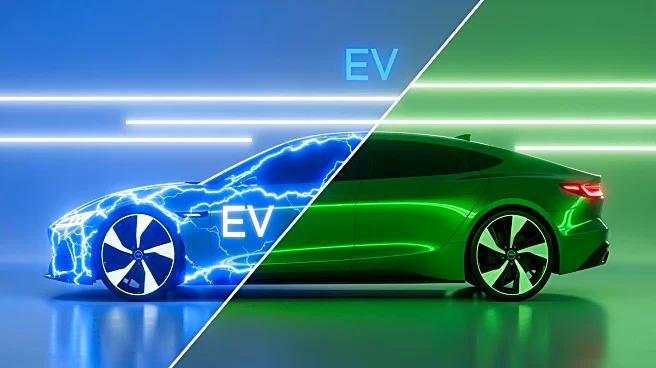
Consumer Reports has concluded its annual road tests, evaluating around 50 new car models at its facility in Colchester. The tests assess various aspects such as acceleration, braking, handling, comfort, safety, and overall road performance. BMW emerged as the top performer, particularly with its X5 model, which was praised for its balance of comfort, dynamics, and interior quality. The X5 was highlighted as the standout in the midsize luxury SUV category. Subaru secured the second position, with its Forester model receiving high marks for stability and control, thanks to its symmetrical all-wheel drive. Hyundai Motor Group also made a strong showing, with its electric models, the Ioniq 9 and Ioniq 5 N, demonstrating impressive handling and excitement,
challenging traditional gasoline sports cars.
Why It's Important?
The results from Consumer Reports indicate a shift in the automotive industry, where traditional premium brands like BMW are being challenged by other manufacturers such as Subaru and Hyundai. This shift suggests that consumers are beginning to prioritize engineering quality and driving experience over brand prestige. The strong performance of Hyundai's electric vehicles highlights the growing competitiveness of EVs in the market, signaling a potential change in consumer preferences towards more sustainable options. This could lead to increased competition among automakers to innovate and improve their offerings, particularly in the electric vehicle segment, which is becoming increasingly important in the context of environmental concerns and regulatory pressures.
What's Next?
As the automotive market evolves, manufacturers are likely to focus more on technological advancements and sustainability. BMW's preparation of the next generation X5 with multiple powertrain options, including hydrogen, indicates a strategic move towards diversifying energy sources. Meanwhile, the success of Hyundai's electric models may encourage other automakers to invest more in EV technology. Consumers can expect a broader range of options that prioritize performance and sustainability. This trend may also influence regulatory policies and industry standards, as governments and organizations push for greener transportation solutions.
Beyond the Headlines
The shift in consumer preferences towards performance and sustainability over brand prestige could have long-term implications for the automotive industry. It may lead to a reevaluation of marketing strategies, with a focus on highlighting engineering excellence and environmental benefits. Additionally, the rise of electric vehicles could accelerate the development of infrastructure to support them, such as charging stations, which would further facilitate the transition to sustainable transportation. This evolution in consumer behavior and industry focus could also impact related sectors, such as energy and technology, as they adapt to meet new demands.