






What's Happening?
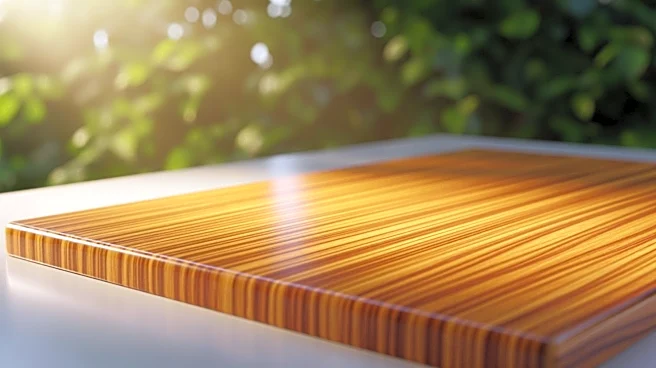
Researchers have developed a novel approach to solar energy storage using engineered wood. This innovation addresses the challenge of solar energy's dependency on sunlight by creating a material that can absorb sunlight, store it as heat, and continue
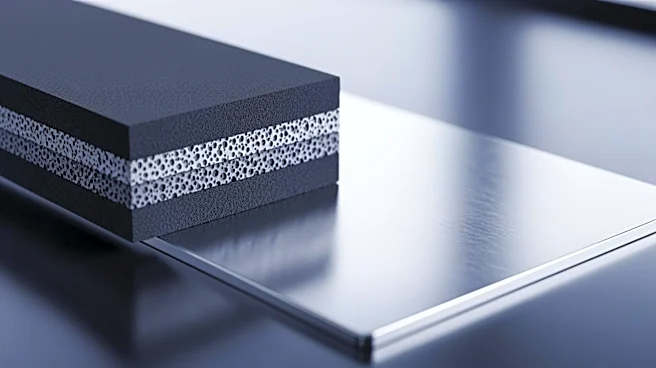
generating electricity even after the sun has set. The process involves redesigning the internal structure of balsa wood at the nanoscale, enhancing its ability to absorb sunlight and store heat. The wood is treated to remove lignin, increasing its porosity and exposing reactive surfaces. It is then coated with black phosphorene, which absorbs sunlight across various wavelengths and converts it into heat. The material is further protected with a metal-polyphenol network to prevent degradation and improve light absorption. Silver nanoparticles are added to enhance light absorption, and the structure is made water-repellent. The channels within the wood are filled with stearic acid, a phase-change material that stores and releases energy efficiently.
Why It's Important?
This development has significant implications for solar energy technology, offering a scalable and environmentally friendly solution for solar thermal energy harvesting. By using wood as a multifunctional material, the system not only supports solar energy storage but also enhances its efficiency and durability. The engineered wood can store about 175 kJ of heat per kilogram and convert over 91% of incoming sunlight into usable heat. This innovation could lead to more reliable and efficient solar power systems, particularly in off-grid applications where consistent energy output is crucial. Additionally, the material's flame retardancy, superhydrophobicity, and antimicrobial properties make it suitable for outdoor use, reducing maintenance and improving longevity.
What's Next?
The researchers aim to scale up the system to ensure it can deliver desirable energy output on a larger scale. If successful, this technology could be adapted to other nanomaterials and biomass structures, potentially revolutionizing solar power systems. The approach may also be applied to manage heat in electronics, improve energy-efficient building materials, and support small power systems where reliability is more important than peak output.
Beyond the Headlines
The use of wood as a solar energy storage medium highlights the potential for integrating natural materials into advanced energy systems. This approach not only leverages the inherent properties of wood but also opens up possibilities for sustainable and eco-friendly energy solutions. The ability to modify wood at the nanoscale could lead to innovations in other fields, such as electronics and construction, where energy efficiency and material sustainability are increasingly important.