


What's Happening?
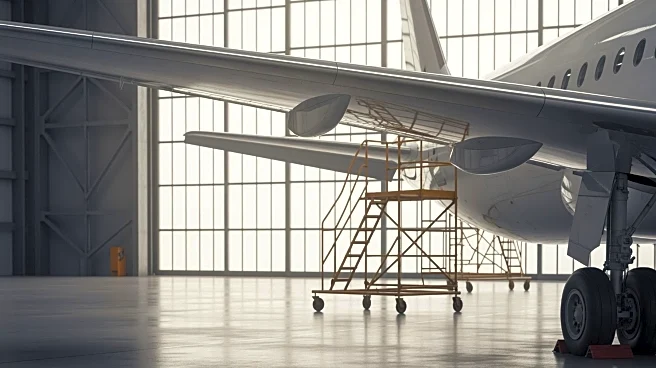
EasyJet is considering expanding its in-house heavy maintenance operations to cover up to 50% of its needs, according to CEO Kenton Jarvis. Currently, the airline manages 25% of its heavy maintenance internally, having acquired SR Technic's facility in Malta
for airframe checks. Jarvis believes that increasing in-house maintenance will allow EasyJet to exert pricing pressure on suppliers and improve control over complex maintenance events. The airline is also focusing on operational reliability, using data analytics to monitor performance and investing in spare parts to ensure quick turnaround times. Despite stabilizing supply chain issues, EasyJet does not plan to perform its own engine maintenance, unlike its competitor Ryanair.
Why It's Important?
The move to increase in-house maintenance is significant for EasyJet as it aims to enhance operational efficiency and reduce costs. By managing more maintenance internally, EasyJet can better control quality and timing, potentially leading to improved service reliability. This strategy may also provide a competitive edge over rivals who rely more heavily on external suppliers. The airline's focus on data analytics and investment in spares highlights its commitment to maintaining high operational standards, which is crucial in the competitive low-cost carrier market. The decision not to pursue in-house engine maintenance suggests a strategic focus on areas where EasyJet can maximize its strengths without overextending its resources.