






What's Happening?
A recent report by Eclipse Automation highlights that while factory automation is prevalent across North America, only a small fraction of manufacturers are seeing significant results from their investments. The study surveyed over 600 executives from various
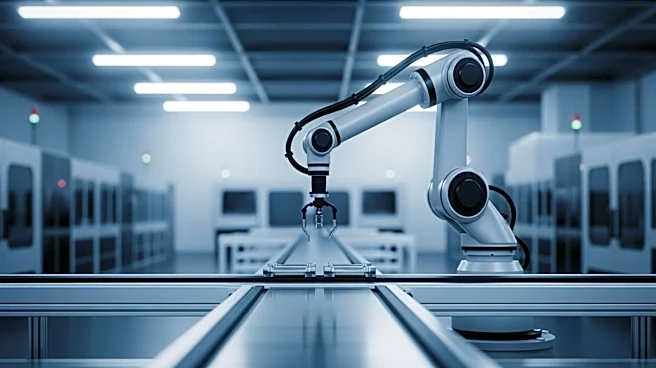
sectors, including automotive and medical devices, revealing that 70% of U.S. manufacturers and 60% of Canadian firms use some form of automation. However, the maturity and performance levels vary widely. The report identifies key factors for successful automation, such as system integration, access to structured data, and a strategic approach that aligns technology with business objectives. Despite widespread adoption, many companies struggle to achieve meaningful outcomes, often due to fragmented systems and lack of clear accountability.
Why It's Important?
The findings underscore a critical challenge for North American manufacturers: the need to move beyond mere adoption of automation technologies to achieve tangible business benefits. As labor shortages persist, automation becomes essential rather than optional. The report suggests that companies that effectively integrate systems and manage data are more likely to succeed. This highlights the importance of a strategic approach to automation, focusing on return on investment and enterprise-wide transformation. The increasing role of artificial intelligence in automation could further widen the gap between successful and struggling firms, emphasizing the need for a structured, data-driven approach.
What's Next?
The report suggests that the next phase of factory automation will depend on how well companies integrate systems and align automation with their business strategies. As more firms plan to adopt AI for automation, those that focus on predictive maintenance and real-time decision-making are likely to see better operational performance. Smaller manufacturers and those at earlier stages of automation can still achieve success by adopting a structured approach. The findings may prompt companies to reevaluate their automation strategies, focusing on system integration and data management to enhance their competitiveness.