





What's Happening?
Cal Flyn, a journalist and author, delves into the concept of wilderness in her work, challenging the traditional notion that wilderness is untouched by human influence. Through her travels and research, Flyn argues that what is often perceived as wild is,
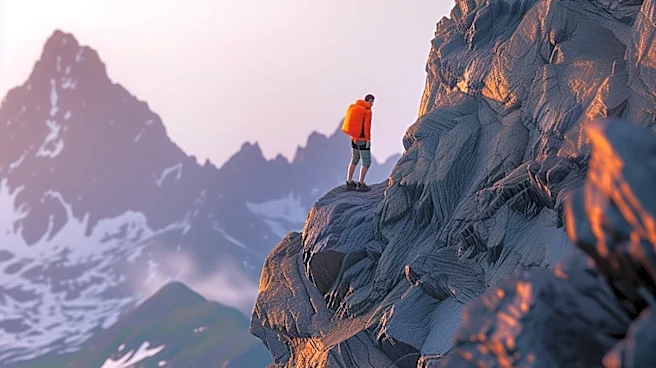
in fact, a landscape shaped by human activity. Her exploration includes experiences such as volcano-chasing in Iceland and trekking in the Himalayas, where she observed the Bonpo people's spiritual interactions with the land. Flyn's journey has led her to a deeper understanding of wilderness as a human construct, influenced by cultural and historical contexts.
Why It's Important?
Flyn's insights into wilderness challenge the conventional understanding of natural landscapes, highlighting the significant role humans play in shaping these environments. This perspective is crucial for conservation efforts, as it emphasizes the need for strategies that acknowledge human impact. By redefining wilderness, Flyn's work encourages a more nuanced approach to environmental preservation, which could influence policy-making and conservation methodologies. Her observations suggest that recognizing human influence is essential for effective stewardship of natural resources, impacting how societies manage and protect these areas.
What's Next?
Flyn's work may inspire further research and dialogue on the human role in shaping wilderness. Conservationists and policymakers might consider integrating her findings into their strategies, potentially leading to more sustainable and culturally sensitive approaches to environmental management. As awareness of human impact grows, there could be increased collaboration between indigenous communities and conservationists to preserve landscapes in a way that respects both ecological and cultural values.
Beyond the Headlines
Flyn's exploration of wilderness as a human construct raises ethical questions about the ownership and management of natural landscapes. It challenges the romanticized view of untouched nature, prompting a reevaluation of how societies perceive and interact with the environment. This shift in perspective could lead to broader cultural changes, influencing how future generations understand and engage with the natural world.