




What's Happening?
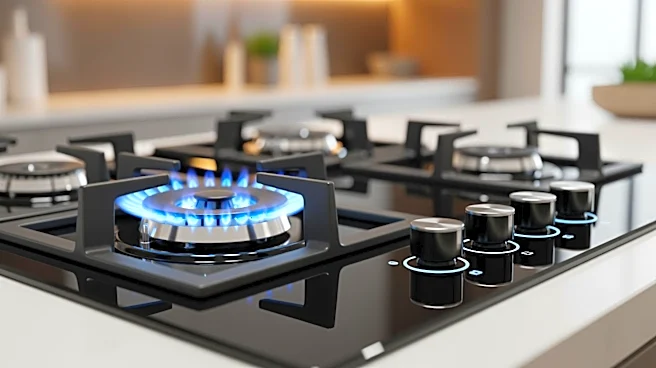
AEG has launched a new line of Step Power glass gas cooktops that aim to modernize traditional gas cooking by integrating precise digital controls. These cooktops offer nine power levels for each burner, providing a level of precision typically associated
with electric cooktops. The design includes LED-lit knobs for safety and aesthetic purposes, indicating when the flame is active or the surface is hot. Additionally, the cooktops feature a powerful turbo flame designed for fast cooking, potentially reducing cooking time by 20% and lowering gas consumption. The cooktops also incorporate a Hood2Hob feature, allowing automatic synchronization with compatible range hoods, aligning with the broader 'smart kitchen' trend. The glass surface of the cooktops is easier to clean but more susceptible to scratches, while the cast iron pan supports offer stability and ease of cleaning.
Why It's Important?
The introduction of the Step Power cooktops by AEG represents a significant development in the kitchen appliance market, particularly for consumers who prefer gas cooking but desire the precision and convenience of modern technology. This innovation could influence the market by setting new standards for gas cooktops, potentially encouraging other manufacturers to integrate similar features. The enhanced efficiency and safety features may appeal to environmentally conscious consumers looking to reduce energy consumption. Additionally, the smart kitchen integration reflects a growing trend towards interconnected home appliances, which could drive further advancements in home automation and energy management.
What's Next?
As these cooktops enter the market, consumer feedback will likely influence future iterations and improvements. The success of the Step Power cooktops could prompt AEG and other manufacturers to expand their smart kitchen offerings, potentially leading to more widespread adoption of interconnected appliances. Retailers and distributors may also adjust their product lines to include more smart kitchen devices, responding to consumer demand for innovative and efficient home solutions. The broader acceptance of such technology could also encourage further research and development in the field of smart home appliances.