





What's Happening?
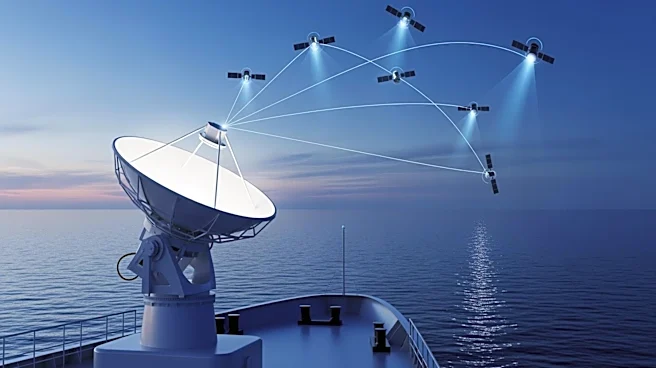
The maritime sector is experiencing significant advancements in safety and operational efficiency due to the deployment of Low Earth Orbit (LEO) satellite networks. These networks provide high-speed, low-latency broadband access, even in remote locations,
which is crucial for the maritime industry that often struggles with unreliable at-sea communications. Since the launch of the first mega-constellations in 2019, the number of LEO satellites has increased dramatically, with over 10,000 satellites in orbit as of 2025. This growth is expected to continue, with plans for around 70,000 additional satellites by 2030. LEO satellites orbit closer to Earth than traditional geostationary satellites, allowing for faster data transfer speeds and lower deployment costs. This enhanced connectivity supports the adoption of next-generation navigation solutions and the International Hydrographic Organization's new S-100 data framework, which offers more detailed and frequent updates to Electronic Navigational Charts (ENCs).
Why It's Important?
The integration of LEO satellite networks into the maritime sector is transformative, providing vessels with reliable access to critical data that enhances navigational confidence and operational efficiency. Mariners can now receive more frequent updates on navigational charts, improving decision-making and safety. The S-100 framework, with its advanced cybersecurity features, further protects navigational data from cyber threats. Additionally, improved ship-to-shore communication allows for better monitoring of vessel systems and cargo, optimizing operations and reducing costs. This connectivity is also pivotal for the development of Maritime Autonomous Surface Ships (MASS), which rely on real-time data for safe navigation. Overall, LEO satellite networks are driving innovation and sustainability in the maritime industry by reducing fuel consumption and emissions through optimized passage times.
What's Next?
As the number of LEO satellites continues to grow, the maritime industry is likely to see further enhancements in connectivity and data availability. This will support the broader adoption of autonomous maritime technologies and more sophisticated navigation systems. Shipping companies and technology developers are expected to leverage these advancements to improve operational efficiency and safety further. The ongoing development of the S-100 framework will continue to play a crucial role in this transformation, providing mariners with richer data sources for informed decision-making. Additionally, the increased focus on cybersecurity within the S-100 framework will help protect against potential cyber threats, ensuring the integrity of navigational data.
Beyond the Headlines
The deployment of LEO satellite networks in the maritime sector highlights the growing importance of data-driven insights in enhancing safety and efficiency. This shift towards more connected and autonomous operations reflects broader trends in the transportation industry, where digital transformation is key to addressing challenges such as environmental sustainability and operational resilience. The maritime sector's embrace of advanced connectivity solutions also underscores the critical role of international collaboration in developing standards and frameworks that support innovation and safety. As these technologies continue to evolve, they may set new benchmarks for other industries seeking to leverage connectivity for improved performance and sustainability.