
What's Happening?
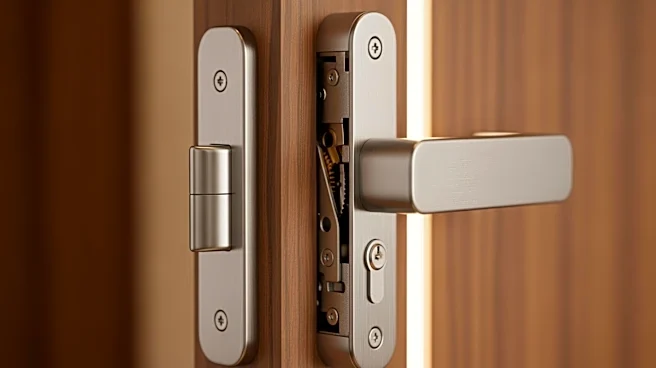
Vingcard, a company under ASSA ABLOY, has introduced the Vingcard Novel DIN, a new electronic lock designed to cater to the evolving needs of modern properties in the hospitality sector. This next-generation
lock is engineered to support DIN lock cases prevalent in Europe, offering a sleek design that fits both new installations and retrofit projects. The Novel DIN lock integrates advanced technologies such as Bluetooth Low Energy (BLE), Near Field Communication (NFC), and Zigbee, enabling mobile access and digital wallet-enabled room entry. This innovation aims to provide heightened safety and convenience across various onsite areas, ensuring compatibility with different building types and door configurations. The lock is also compatible with Vingcard’s Vostio access management platform, allowing for centralized, cloud-native access control management.
Why It's Important?
The introduction of the Vingcard Novel DIN lock is significant for the hospitality industry as it addresses the growing demand for secure and adaptable access solutions. By incorporating advanced connectivity options like BLE, NFC, and Zigbee, the lock enhances the user experience by offering flexible and convenient access methods. This development is crucial for properties aiming to modernize their security infrastructure while maintaining compatibility with existing systems. The ability to manage access control through a centralized platform like Vostio provides properties with real-time updates and scalable deployment, which can lead to improved operational efficiency and enhanced security measures. As the hospitality industry continues to evolve, innovations like the Novel DIN lock are essential for meeting the diverse needs of modern properties and ensuring guest safety and satisfaction.
What's Next?
With the launch of the Vingcard Novel DIN lock, properties in the hospitality sector are likely to explore the integration of this technology to enhance their security systems. The lock's compatibility with various door configurations and its support for multiple RFID credential technologies make it a versatile choice for different environments. As properties adopt this new technology, there may be an increased focus on training staff to manage and operate the new access control systems effectively. Additionally, the industry might see a trend towards more properties adopting cloud-native access management solutions to streamline operations and improve security. The success of the Novel DIN lock could also encourage further innovations in electronic lock technology, driving the industry towards more advanced and secure access solutions.