
What's Happening?
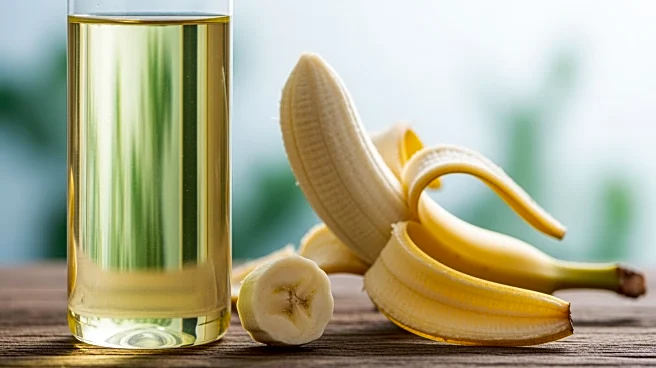
Banana water is being introduced as a new alternative to traditional sports drinks, marketed for its natural electrolytes and hydration benefits. The product is made by steaming and mashing bananas to extract
liquid, which is then pasteurized and canned. Two major brands, Woodstock and Banagua, are leading the market, promoting their products as organic and free from added sugars. Despite its novelty, banana water has received mixed reviews from consumers and dietitians. Some appreciate its mild flavor and potential for hydration, while others question its nutritional completeness compared to traditional sports drinks and whole bananas.
Why It's Important?
The introduction of banana water highlights a growing trend towards natural and organic alternatives in the sports drink market. This product could appeal to health-conscious consumers seeking to avoid artificial ingredients and added sugars. However, dietitians express concerns about its lack of sodium and fiber, which are crucial for effective hydration and energy replenishment during exercise. The product's success may depend on its ability to meet the nutritional needs of athletes and active individuals, potentially influencing the sports drink industry to innovate and offer more natural options.
What's Next?
As banana water gains attention, it may prompt further research and development in the sports drink sector to address its nutritional gaps. Companies might explore fortifying banana water with additional electrolytes or creating blends that offer a more balanced nutrient profile. Consumer feedback will likely play a significant role in shaping the product's evolution and market presence. Additionally, the response from traditional sports drink manufacturers could lead to increased competition and innovation in the industry.
Beyond the Headlines
The rise of banana water reflects broader consumer trends towards sustainability and transparency in food and beverage production. As consumers become more informed about ingredient sourcing and processing methods, products like banana water could drive demand for more environmentally friendly and ethically produced goods. This shift may encourage companies to adopt more sustainable practices and highlight the importance of transparency in marketing and product labeling.