






What's Happening?
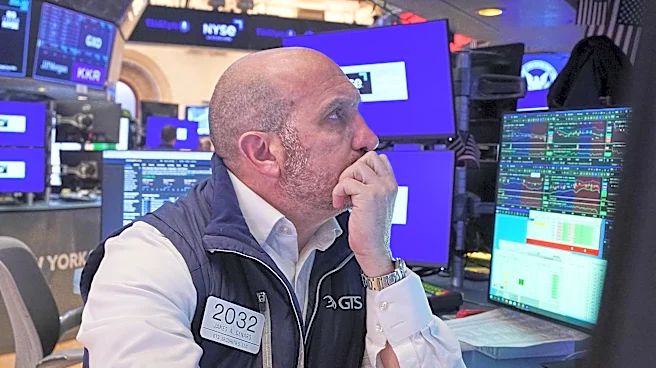
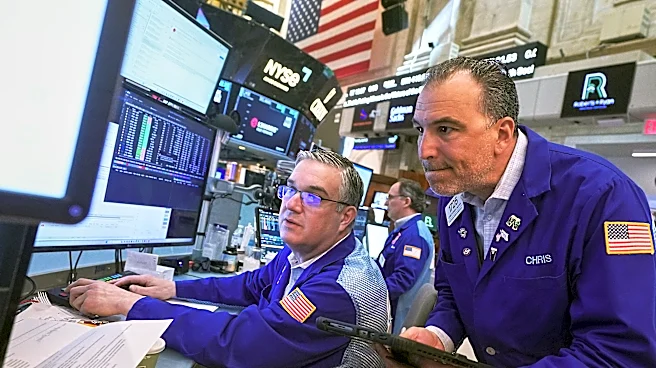
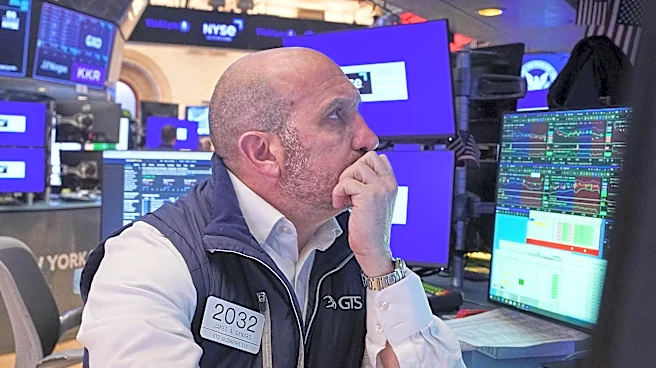
The U.S. stock market saw a decline on Thursday, driven by a drop in software stocks and an increase in oil prices. The S&P 500 fell by 0.41% to close at 7,108.40, while the Nasdaq Composite decreased by 0.89% to 24,438.50. The Dow Jones Industrial Average
also dropped by 179.71 points, closing at 49,310.32. This downturn followed a period of record highs for both the S&P 500 and Nasdaq. The decline in software stocks was led by significant losses in IBM and ServiceNow, which fell by over 8% and nearly 18%, respectively, after releasing their quarterly results. The ongoing conflict between the U.S. and Iran, particularly the naval standoff in the Strait of Hormuz, has contributed to market uncertainty. President Trump has ordered the U.S. Navy to take aggressive action against Iranian threats in the region. Additionally, oil prices have surged, with Brent crude futures exceeding $105 per barrel, amid reports of internal political shifts in Iran.
Why It's Important?
The recent market fluctuations highlight the sensitivity of U.S. stocks to geopolitical tensions and sector-specific developments. The decline in software stocks, a significant component of the tech-heavy Nasdaq, underscores the impact of corporate earnings and geopolitical events on investor sentiment. The rise in oil prices, driven by the U.S.-Iran conflict, could have broader economic implications, potentially affecting inflation and consumer spending. The situation in the Strait of Hormuz is critical, as it is a major transit route for global oil supplies. Any disruption could lead to further volatility in energy markets, impacting industries reliant on stable oil prices. Investors and policymakers will need to monitor these developments closely, as they could influence economic forecasts and strategic decisions.
What's Next?
The U.S. stock market is likely to remain volatile as investors await further developments in the U.S.-Iran conflict and corporate earnings reports. The market's response to geopolitical tensions will be crucial in determining future trends. Additionally, the Federal Reserve's monetary policy decisions, influenced by inflationary pressures from rising oil prices, could play a significant role in shaping market dynamics. Stakeholders will be watching for any signs of de-escalation in the Middle East, as well as updates from major tech companies, to gauge the market's direction.