



What's Happening?
San Francisco-based technology company Saildrone has announced its entry into the competition for the U.S. Navy's Medium Unmanned Surface Vessel (MUSV) program. This program is part of the Navy's efforts to develop a new class of blue-water unmanned combatants.
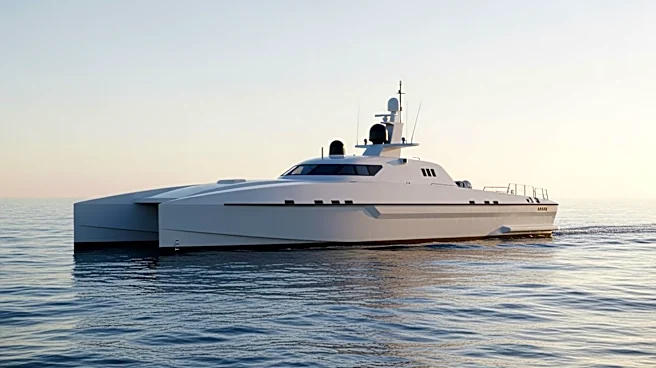
Saildrone's proposed vessel, named the Spectre, is designed to carry containerized payloads for various missions and features an optional sail for near-silent operation, which is crucial for anti-submarine warfare. The Spectre can reach speeds of 27 knots and has a payload capacity of 25 tonnes. It also includes CPP propulsion with electric power, allowing for a low acoustic signature when hunting submarines. For strike missions, the vessel can be equipped with two Mk70 VLS launchers, totaling eight VLS cells. Saildrone plans to begin construction of the first hull at Fincantieri Marine Group, with sea trials expected to commence early next year.
Why It's Important?
The entry of Saildrone into the MUSV competition highlights the growing interest and investment in unmanned naval technology. The U.S. Navy has allocated significant funding for the development of medium unmanned surface vessels, with $2.1 billion set aside for these projects under the One Big Beautiful Bill Act. This initiative is part of a broader trend towards integrating advanced unmanned systems into military operations, which could enhance the Navy's capabilities in surveillance, reconnaissance, and combat. The competition also underscores the collaboration between technology companies and traditional shipbuilders, as seen in Saildrone's partnership with Fincantieri and Lockheed Martin. The success of such ventures could lead to significant advancements in naval warfare technology and strategy.
What's Next?
Saildrone's participation in the MUSV program is expected to progress with the construction of the first vessel hull and subsequent sea trials. The outcome of these trials will be crucial in determining the viability and effectiveness of Saildrone's design. If successful, the Spectre could become a key component of the Navy's future unmanned fleet. Additionally, the broader MUSV program will continue to attract interest from other defense contractors and technology firms, potentially leading to further innovations in unmanned naval systems. The Navy's ongoing investment in these technologies suggests a long-term commitment to enhancing its operational capabilities through unmanned solutions.