


What's Happening?
Federal Reserve Bank of Boston President Susan Collins has indicated that there is no immediate need to alter interest rates, emphasizing a cautious approach to monetary policy. Collins highlighted that the decision to ease monetary policy would depend
on inflation retreating to the 2% target. She noted the current federal funds target rate is between 3.5% and 3.75%, and any potential rate cuts would require clear evidence of inflation moving towards the target. Collins also pointed out the economic uncertainty exacerbated by geopolitical tensions, such as the U.S.-Israel conflict with Iran, and its impact on energy prices. Despite these challenges, Collins maintains a baseline outlook of solid economic growth and a stable labor market, with disinflation expected later in the year.
Why It's Important?
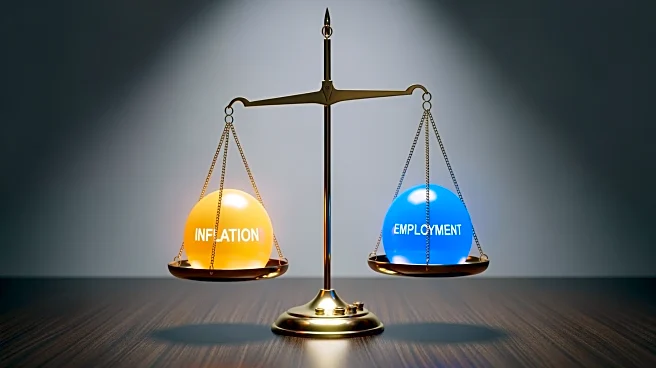
The Federal Reserve's stance on interest rates is crucial for economic stability, particularly in the face of inflationary pressures and geopolitical uncertainties. Collins' emphasis on maintaining current rates reflects a cautious approach to avoid exacerbating inflation while supporting economic growth. The decision impacts various stakeholders, including businesses and consumers, as interest rates influence borrowing costs and investment decisions. The Fed's policy also affects global markets, as U.S. monetary policy can have ripple effects on international economies. The ongoing geopolitical tensions and their impact on energy prices further complicate the Fed's decision-making process, highlighting the delicate balance between controlling inflation and supporting economic growth.
What's Next?
The Federal Reserve is expected to hold interest rates steady at its upcoming March 17-18 meeting. However, market projections suggest potential rate cuts later in the year, contingent on inflation trends and economic conditions. The Fed will continue to monitor inflation and labor market data closely, with geopolitical developments also playing a significant role in shaping future policy decisions. Stakeholders, including businesses and investors, will be watching for any signals from the Fed regarding changes in monetary policy, as these decisions will influence economic forecasts and market strategies.