






What's Happening?
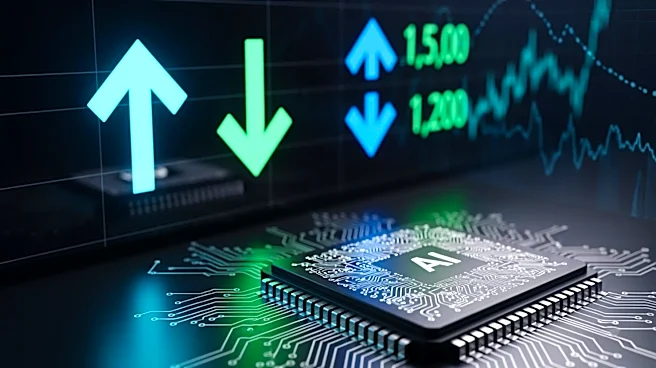
The artificial intelligence (AI) sector is experiencing a significant market rally, with the SOX semiconductor index reaching a peak price 62% higher than its 200-day moving average. This surpasses historical market events such as the Dow Jones Industrial
Average before Black Monday in 1987 and the Nasdaq before the dot-com crash in 2000. The current AI investment, projected to exceed $1 trillion next year, is being compared to past economic bubbles like the Mississippi Bubble of 1720. Despite concerns of a bubble, AI-related revenues are materializing, with companies like Alphabet, Amazon, and Microsoft reporting substantial growth in their cloud services.
Why It's Important?
The rapid growth in AI investments and stock valuations highlights both the potential and risks associated with emerging technologies. While some economists warn of a bubble, others note that past bubbles in sectors like railroads and electricity led to transformative changes. The concentration of market gains in AI and semiconductor stocks suggests a fragile foundation for the broader equity market. This situation could impact investors, tech companies, and the overall economy, as a potential correction might affect financial stability and innovation funding.
What's Next?
Market analysts and investors are closely monitoring the AI sector for signs of a correction. Companies may continue to invest heavily in AI, potentially leading to further market concentration. Regulatory bodies might also scrutinize the sector to prevent systemic risks. The outcome of these developments could influence future investment strategies and the pace of technological advancement.
Beyond the Headlines
The AI boom raises questions about the sustainability of rapid technological growth and its societal impacts. Ethical considerations, such as data privacy and job displacement, may become more prominent as AI technologies become more integrated into daily life. Long-term, the sector's evolution could redefine economic structures and labor markets.