



What's Happening?
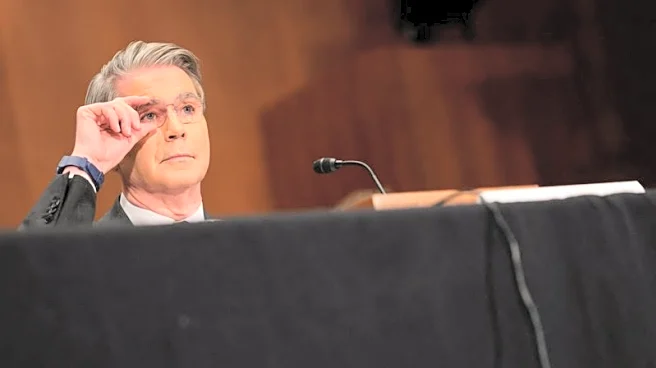
Chicago Federal Reserve President Austan Goolsbee has expressed his opposition to the recent decision by the Federal Open Market Committee (FOMC) to cut the benchmark interest rate by 25 basis points to a range of 3.5% to 3.75%. Goolsbee, along with two other committee members, voted against the rate cut, arguing that more data was needed before making such a decision. He emphasized that inflation remains above the Fed's 2% target, with recent readings showing an annual rate of 2.8%. Goolsbee's stance is that the committee should have waited until the first quarter of 2026 to ensure inflation trends are truly transitory before proceeding with further rate reductions.
Why It's Important?
The decision to cut interest rates is significant as it reflects the Federal
Reserve's approach to managing economic growth and inflation. Goolsbee's dissent highlights a division within the Fed regarding the timing and necessity of rate cuts. His concerns about inflation suggest that some policymakers are wary of easing monetary policy too quickly, which could potentially undermine efforts to stabilize prices. This decision impacts various economic stakeholders, including businesses and consumers, who may experience changes in borrowing costs and economic confidence. The debate within the Fed underscores the challenges of balancing economic growth with inflation control.
What's Next?
Looking ahead, the Federal Reserve will continue to monitor economic indicators, particularly inflation and labor market data, to guide future monetary policy decisions. Goolsbee's comments suggest that the Fed may adopt a more cautious approach in the coming months, potentially delaying further rate cuts until there is clearer evidence of inflationary trends. The ongoing discussions within the Fed will likely influence market expectations and investor behavior, as stakeholders seek to anticipate the central bank's next moves. Additionally, the Fed's decisions will be closely watched by political leaders and economic analysts, who may weigh in on the implications for broader economic policy.