




What's Happening?
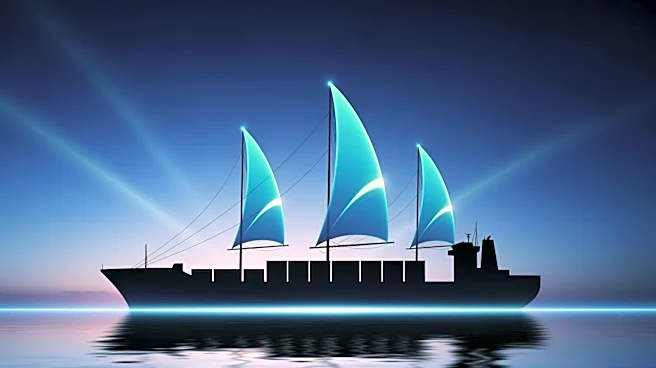
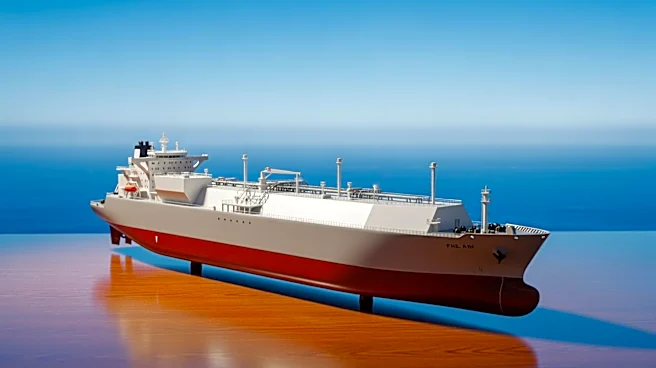
Mitsui O.S.K. Lines (MOL) has secured approval in principle from ClassNK for a new liquefied CO2 (LCO2) carrier design featuring wind-assisted propulsion systems. Developed in collaboration with Samsung Heavy Industries, the vessel is equipped with three
Wind Challenger units, a rigid sail system that utilizes wind power to aid propulsion. The design, intended for cross-border CO2 transport, includes a cargo capacity of approximately 40,000 cubic meters. The vessel's layout optimizes visibility and safety, incorporating features like a passage between the engine room and accommodation areas. This innovation is part of MOL's strategy to reduce fuel consumption and greenhouse gas emissions in carbon capture and storage value chains.
Why It's Important?
The approval of MOL's wind-assisted LCO2 carrier design represents a significant advancement in sustainable maritime transport. By integrating wind power into its propulsion systems, MOL aims to decrease reliance on fossil fuels, thereby reducing emissions and operational costs. This development aligns with global efforts to combat climate change by promoting cleaner energy solutions. The successful implementation of such technologies could set a precedent for the shipping industry, encouraging other companies to adopt similar eco-friendly practices. As the demand for carbon capture and storage solutions grows, MOL's innovative design could play a crucial role in facilitating efficient and sustainable CO2 transport.
What's Next?
MOL plans to expand its fleet of vessels equipped with Wind Challenger systems, targeting 25 vessels by 2030 and 80 by 2035. This expansion will likely involve further collaboration with shipbuilders and classification societies to refine and enhance the technology. As the shipping industry faces increasing pressure to reduce emissions, MOL's wind-assisted design could attract interest from other maritime companies seeking sustainable solutions. Regulatory bodies may also consider implementing standards or incentives to promote the adoption of such technologies. The success of MOL's initiative could influence future maritime policies and drive innovation in green shipping technologies.