






What's Happening?
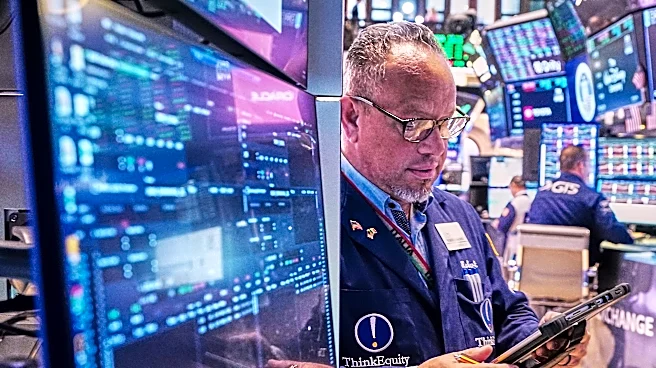
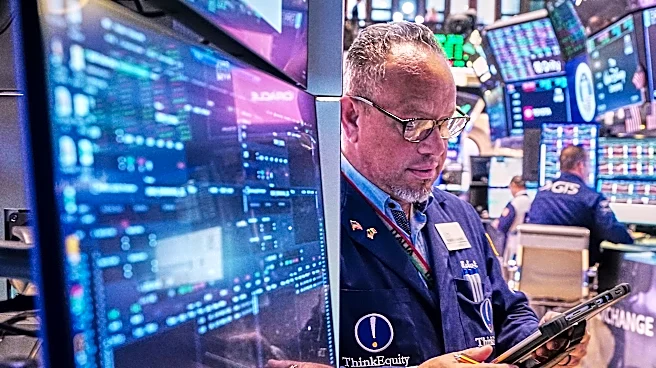
The U.S. stock market experienced significant volatility due to ongoing tensions in the Middle East, particularly the conflict between the U.S. and Iran. Despite these geopolitical concerns, the S&P 500 and Nasdaq reached new record highs, driven largely
by strong performances in the technology sector. Dell Technologies led the surge with a 32.8% increase in stock value after reporting earnings that exceeded expectations and raising its outlook due to high demand for AI computing. Other tech giants like Microsoft and Broadcom also saw substantial gains. However, most other sectors in the S&P 500 experienced declines. The market's resilience was further supported by positive corporate earnings and optimism about a potential ceasefire deal between the U.S. and Iran, which helped ease oil price pressures.
Why It's Important?
The stock market's performance is a critical indicator of economic health and investor confidence. The recent gains, particularly in the tech sector, suggest strong corporate earnings and investor optimism despite geopolitical tensions. The potential ceasefire between the U.S. and Iran could stabilize oil prices, which have been a significant concern due to their impact on inflation and economic growth. High oil prices, exacerbated by disruptions in the Strait of Hormuz, have contributed to rising inflation, affecting consumer confidence and spending. The Federal Reserve's decision to hold interest rates steady reflects its cautious approach to managing inflation without stifling economic growth. The market's ability to maintain gains amidst these challenges highlights the resilience of the U.S. economy and the pivotal role of the tech sector in driving growth.
What's Next?
Looking ahead, the market will likely continue to monitor developments in the Middle East, particularly any progress towards a ceasefire, which could further stabilize oil prices and reduce inflationary pressures. The Federal Reserve's upcoming meetings will be closely watched for any changes in interest rate policy, as these decisions will impact borrowing costs and economic activity. Investors will also focus on consumer behavior and inflation trends, as these factors will influence market dynamics and corporate profitability. The tech sector's performance will remain a key driver of market trends, with continued demand for AI and other technologies potentially sustaining growth.