
What's Happening?
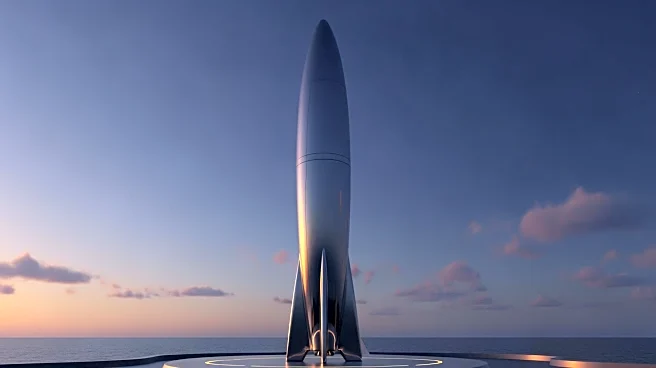
SpaceX's Starship, the largest rocket in the world, is set to launch from Florida in 2026. The rocket is designed to transport NASA astronauts to the moon and eventually humans to Mars. SpaceX is developing
a new version of Starship, known as Version 3, which is expected to reach orbit and refuel its upper stage midflight. This capability is crucial for missions to distant destinations like Mars. Meanwhile, Chinese companies and the state space program have unveiled rocket designs that closely resemble SpaceX's Starship. These designs include the Xingzhou-1 by Beijing Leading Rocket Technology and other concepts by startups like Cosmoleap and Astronstone. Despite these developments, Chinese companies are still behind SpaceX in terms of reliable rocket development.
Why It's Important?
The development of SpaceX's Starship is significant for the U.S. space program, as it is expected to play a crucial role in NASA's Artemis program, which aims to land astronauts on the moon. Additionally, the Starship's potential to transport humans to Mars aligns with Elon Musk's vision of interplanetary travel. The imitation of Starship designs by Chinese companies highlights the competitive nature of the global space industry. This competition could drive innovation and advancements in space technology. However, it also raises concerns about intellectual property and the strategic implications of space exploration capabilities.
What's Next?
SpaceX plans to launch the next prototype of Starship, Version 3, in 2026. The company aims to conduct the first Florida launch of Starship from NASA's Kennedy Space Center. SpaceX is also working to maintain its contract with NASA for the Artemis program, despite concerns about delays. The competition from Chinese companies may lead to increased scrutiny and potential policy responses from the U.S. government. The success of Starship's upcoming launches will be critical in determining its role in future space missions.