



What's Happening?
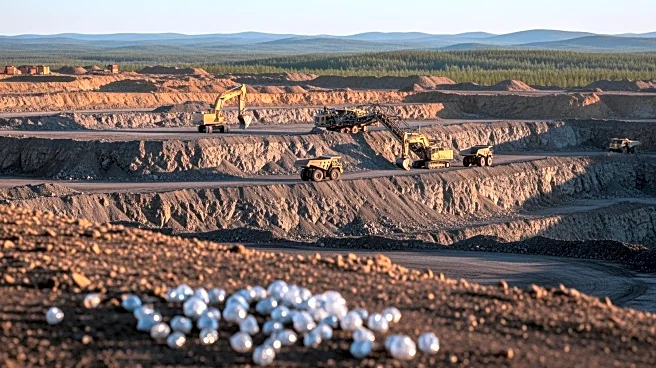
Rio Tinto has officially ended production at its Diavik diamond mine, located in Canada's Northwest Territories. This marks the conclusion of over two decades of operations that began in 2003, following the mine's discovery in 1991. The Diavik mine, situated
approximately 220 kilometers south of the Arctic Circle, has produced over 150 million carats of rough diamonds, primarily white gem-quality stones, with some rare yellow diamonds. The mine utilized both open-pit and underground mining methods across its four kimberlite pipes. The closure was commemorated with a ceremony attended by Indigenous government organizations, government representatives, and other stakeholders. Rio Tinto has emphasized that closure planning has been in place since before production began, with rehabilitation activities scheduled to continue until 2029, followed by post-closure monitoring.
Why It's Important?
The closure of the Diavik diamond mine is significant for several reasons. Economically, the mine has been a major contributor to the Canadian diamond industry, providing substantial socioeconomic benefits to the Northwest Territories. The collaboration between Rio Tinto and Indigenous partners has been highlighted as a successful model of modern mining operations. The end of production at Diavik may impact local employment and the regional economy, as the mine has been a key source of jobs and economic activity. Additionally, the closure underscores the challenges and lifecycle of mining operations in remote and environmentally sensitive areas, highlighting the importance of sustainable practices and long-term planning in the industry.
What's Next?
Following the end of production, Rio Tinto will focus on the rehabilitation of the Diavik site, with activities planned to continue until 2029. This will involve environmental restoration and monitoring to ensure the site is returned to a stable and sustainable state. The company will also continue to process, polish, and sell the final production of diamonds through its global network until 2026 and beyond. Stakeholders, including Indigenous communities and local governments, will likely be involved in the ongoing monitoring and rehabilitation efforts, ensuring that the mine's closure leaves a positive legacy for the region.