






What's Happening?
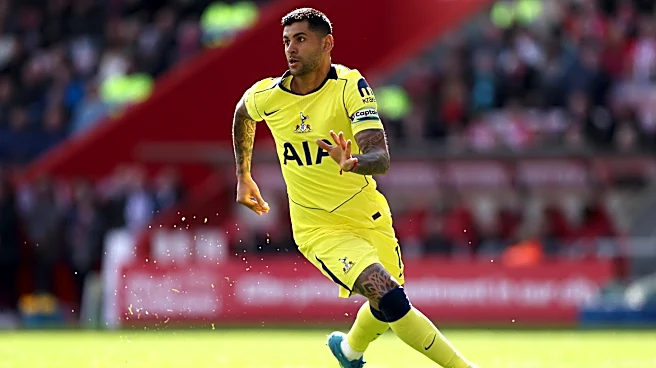
Cristian Romero, captain of Tottenham Hotspur, has faced criticism for choosing to travel to Argentina to watch his boyhood club, Belgrano, in a championship decider against River Plate, rather than supporting his team in a crucial Premier League relegation
match against Everton. Romero, who is currently sidelined due to a knee injury, has been a visible presence on the sidelines during previous matches, but his decision to prioritize the Argentine fixture has raised questions about his leadership. The timing is sensitive as Tottenham faces the threat of relegation, and Romero's absence has sparked debate among fans and commentators.
Why It's Important?
Romero's decision to miss Tottenham's relegation decider highlights the tension between personal affiliations and professional responsibilities. As captain, his absence could impact team morale and leadership dynamics at a critical juncture. Tottenham's potential relegation would have significant financial and competitive implications, affecting player contracts, sponsorships, and the club's standing in English football. Romero's choice underscores the challenges athletes face in balancing personal loyalties with professional commitments, and it may influence perceptions of his dedication to the club.
What's Next?
Tottenham's fate in the Premier League hinges on their performance against Everton. A win would secure their status, while a loss combined with a West Ham victory could result in relegation. The club's management and fans will be closely watching the outcome, which could lead to strategic changes in leadership and player roster. Romero's decision may prompt discussions about his future role and commitment to the team, potentially influencing transfer decisions and contract negotiations.
Beyond the Headlines
Romero's choice to support Belgrano reflects the deep personal connections athletes maintain with their roots, which can sometimes conflict with professional obligations. This situation highlights the cultural significance of football in Argentina, where club affiliations often carry historical and emotional weight. The broader narrative touches on the global nature of sports, where players navigate complex identities and loyalties across different leagues and countries.