


What's Happening?
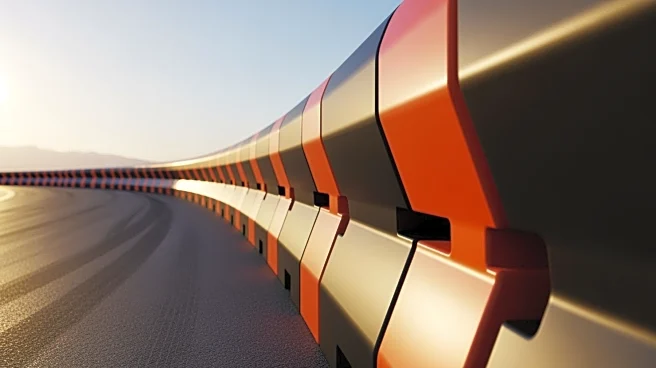
Phoenix Raceway is set to host the 'Desert Double' event, featuring both the NASCAR Cup Series and the NTT IndyCar Series. For this event, the track will utilize the NASCAR configuration of the SAFER Barrier, a safety feature designed to absorb and disperse
energy during crashes. The decision to use the NASCAR setup was made in collaboration with IndyCar safety personnel, who agreed that it would be the most suitable for the mile oval at Phoenix. The SAFER Barrier, which stands for Steel And Foam Energy Reduction Barrier, was developed through a partnership between the University of Nebraska and IndyCar engineers and first installed in 2002. It consists of structural steel tubes and polystyrene foam, designed to reduce impact on drivers and cars. The event will span four days, with various races and practices scheduled, culminating in the NASCAR Cup Series' Straight Talk Wireless 500.
Why It's Important?
The implementation of the NASCAR SAFER Barrier at Phoenix Raceway underscores the ongoing commitment to safety in motorsports. By using a barrier configuration that is deemed optimal for both NASCAR and IndyCar vehicles, the event organizers aim to minimize the risk of injury to drivers and damage to vehicles. This decision highlights the importance of adaptive safety measures in racing, where different series may have varying requirements due to differences in vehicle weight and speed. The collaboration between NASCAR and IndyCar safety teams also reflects a broader trend of cross-series cooperation to enhance safety standards. This move could set a precedent for future events where multiple racing series share a track, potentially influencing safety protocols across the industry.
What's Next?
As the 'Desert Double' event unfolds, stakeholders will closely monitor the performance of the SAFER Barrier in its NASCAR configuration. The outcomes of this event could inform future decisions regarding safety measures at racetracks hosting multiple series. Additionally, the collaboration between NASCAR and IndyCar safety teams may lead to further joint efforts in developing and implementing safety technologies. The success of this event could encourage other racetracks to adopt similar safety configurations, potentially leading to industry-wide changes in how safety barriers are utilized. The feedback from drivers and teams will be crucial in assessing the effectiveness of the barrier setup and may drive further innovations in racing safety.