



What's Happening?
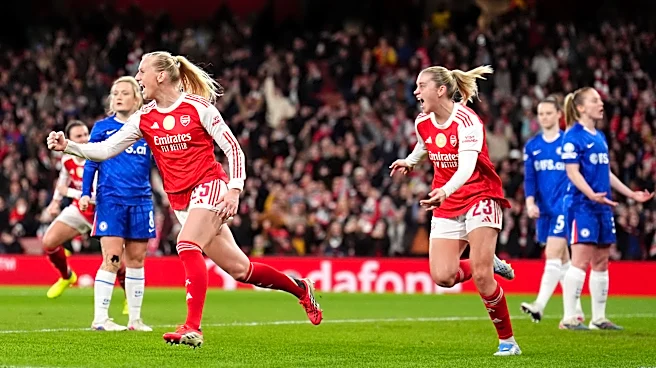
UEFA has decided not to alter its selection process for officials in the Women's Champions League despite criticism from Chelsea head coach Sonia Bompastor. The controversy arose after a match against Arsenal where a hair-pulling incident involving Katie
McCabe and Alyssa Thompson was not reviewed by VAR, leading to Bompastor's frustration. Bompastor, who was shown a red card for her protests, has been vocal about the need for better officiating standards in the women's game. UEFA, however, stands by its officials, citing their experience and training. The organization is awaiting match reports but is unlikely to take disciplinary action against Bompastor.
Why It's Important?
This situation highlights ongoing concerns about the quality of officiating in women's football, particularly in high-stakes matches like the Champions League. The lack of VAR intervention in clear incidents can affect the outcome of games and the perception of fairness in the sport. For Chelsea, the decision not to review the incident could have impacted their chances in the tournament. UEFA's stance suggests a commitment to its current officiating framework, but it also underscores the need for continuous improvement and adaptation in response to feedback from teams and coaches.
What's Next?
As UEFA awaits the match reports, the focus will likely remain on how the organization addresses officiating concerns in future matches. Chelsea and other teams may continue to advocate for changes in the use of technology like VAR to ensure fair play. The incident could also prompt discussions within UEFA about enhancing referee training and the criteria for VAR intervention. The outcome of these discussions could influence the future of officiating standards in women's football.