







What's Happening?
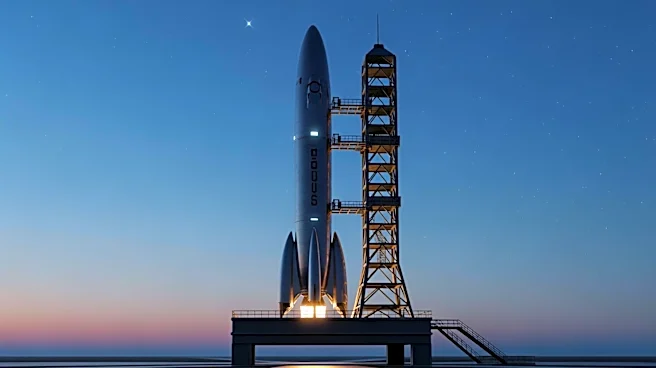
SpaceX is set to launch its first Version 3 Starship from the Starbase facility in South Texas. This test flight, known as Flight 12, is crucial for demonstrating the redesigned rocket's capabilities for routine satellite launches, lunar missions, and
potential reuse. The launch window opens at 5:30 p.m. local time, and the mission will involve deploying 20 Starlink simulator satellites and two modified Starlink satellites. The test will assess the rocket's heat shield and reentry handling, with the upper stage aiming for a controlled splashdown in the Indian Ocean. This launch is pivotal for SpaceX as it prepares for an expected IPO and aims to support NASA's Artemis missions.
Why It's Important?
The success of the Starship V3 launch is critical for SpaceX's future plans, including its role in NASA's Artemis program, which aims to return humans to the Moon. The new Starship model is designed to carry larger payloads and facilitate in-space refueling, which are essential for deep space exploration. A successful test would bolster investor confidence ahead of SpaceX's anticipated IPO and demonstrate the company's ability to meet NASA's requirements for lunar missions. The launch also represents a significant step towards achieving full rocket reuse, which could drastically reduce launch costs and increase the frequency of space missions.
What's Next?
Following the test, SpaceX will analyze the data to refine the Starship's design and performance. The company plans to continue testing and development to ensure the rocket meets the rigorous demands of future missions. If successful, the Starship V3 could play a key role in NASA's Artemis III mission, scheduled for 2027, which involves docking with commercial lunar landers. SpaceX's progress will be closely watched by investors, NASA, and the broader space industry as it seeks to establish itself as a leader in space exploration and commercial spaceflight.