





What's Happening?
Pickle juice is gaining traction as a health supplement, particularly among athletes, for its potential benefits in hydration, muscle cramp prevention, and gut health. Registered dietitians Amy Shapiro and Gena Hamshaw highlight that while pickle juice is high in sodium,
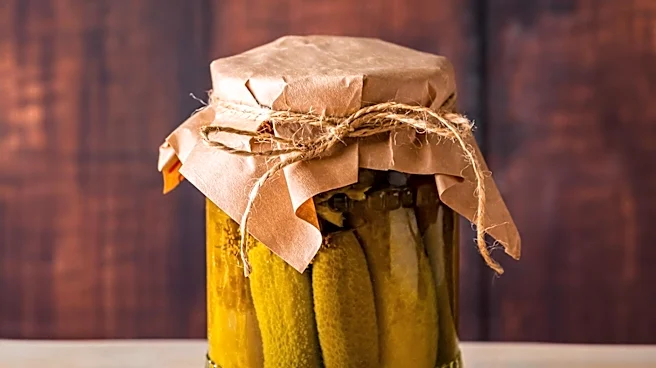
it may help alleviate muscle cramps and provide electrolytes. However, they caution that excessive consumption can lead to acid reflux or nausea, and it may not be suitable for individuals with certain health conditions like kidney disease or hypertension. The brine from lacto-fermented pickles is noted for its probiotic benefits, which can support gut health. Despite its popularity on social media platforms like TikTok, experts emphasize that more research is needed to substantiate claims about its effects on cortisol levels.
Why It's Important?
The growing interest in pickle juice reflects a broader trend towards functional beverages that offer health benefits beyond basic hydration. This trend is significant as it aligns with consumer demand for natural and effective health solutions. For athletes, the potential for pickle juice to prevent muscle cramps and aid in recovery could enhance performance and reduce downtime. The emphasis on gut health and probiotics also taps into the increasing awareness of the gut microbiome's role in overall health. However, the lack of clinical trials on its effects on cortisol levels suggests that consumers should approach these claims with caution.
What's Next?
As the popularity of pickle juice continues to rise, it is likely that more research will be conducted to explore its health benefits and potential risks. This could lead to the development of new products and formulations that maximize its positive effects while minimizing any adverse outcomes. Additionally, the beverage industry may see an increase in the production of pickle juice and similar functional drinks, catering to health-conscious consumers and athletes. Stakeholders in the health and wellness sector may also engage in further studies to validate the claims associated with pickle juice consumption.